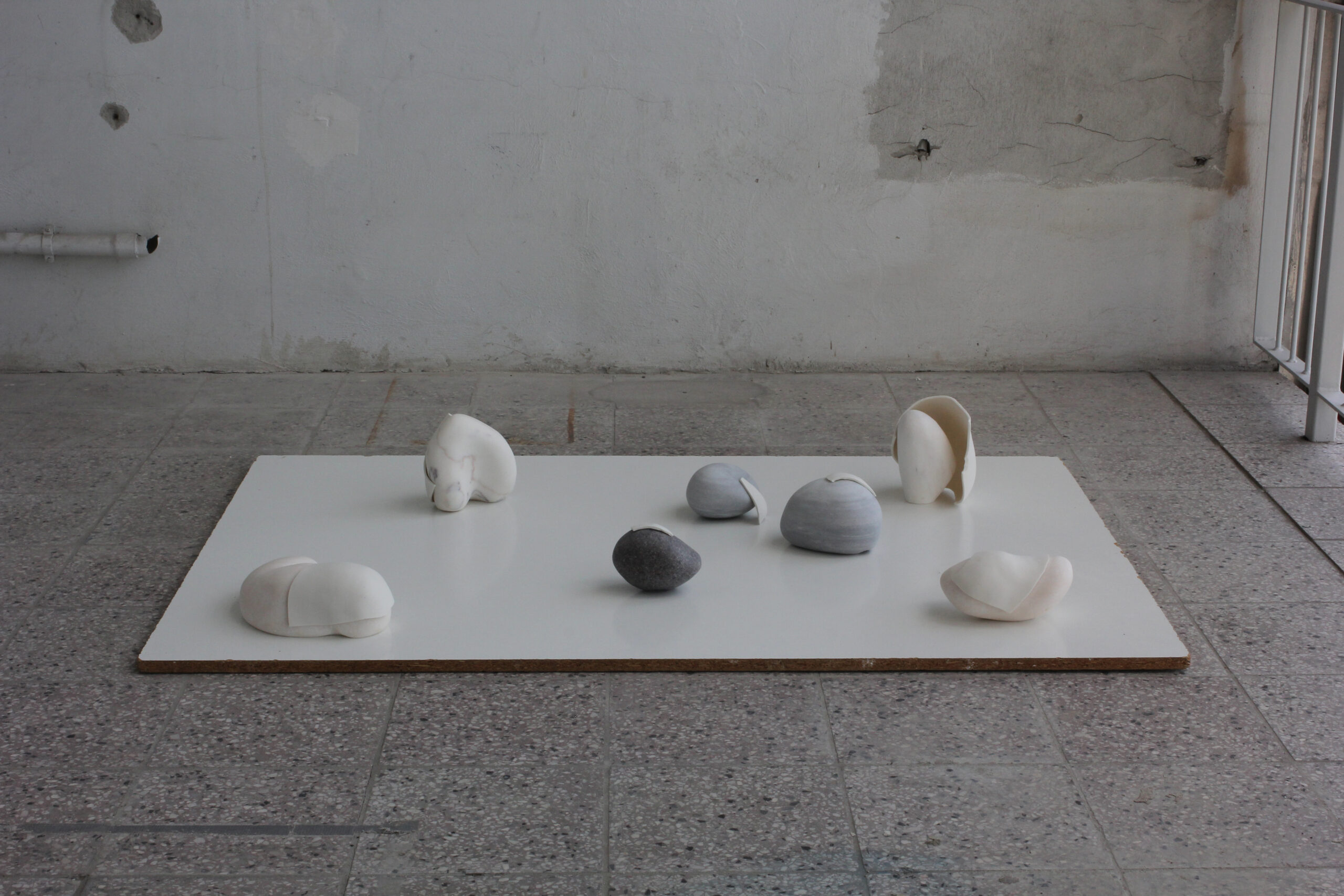
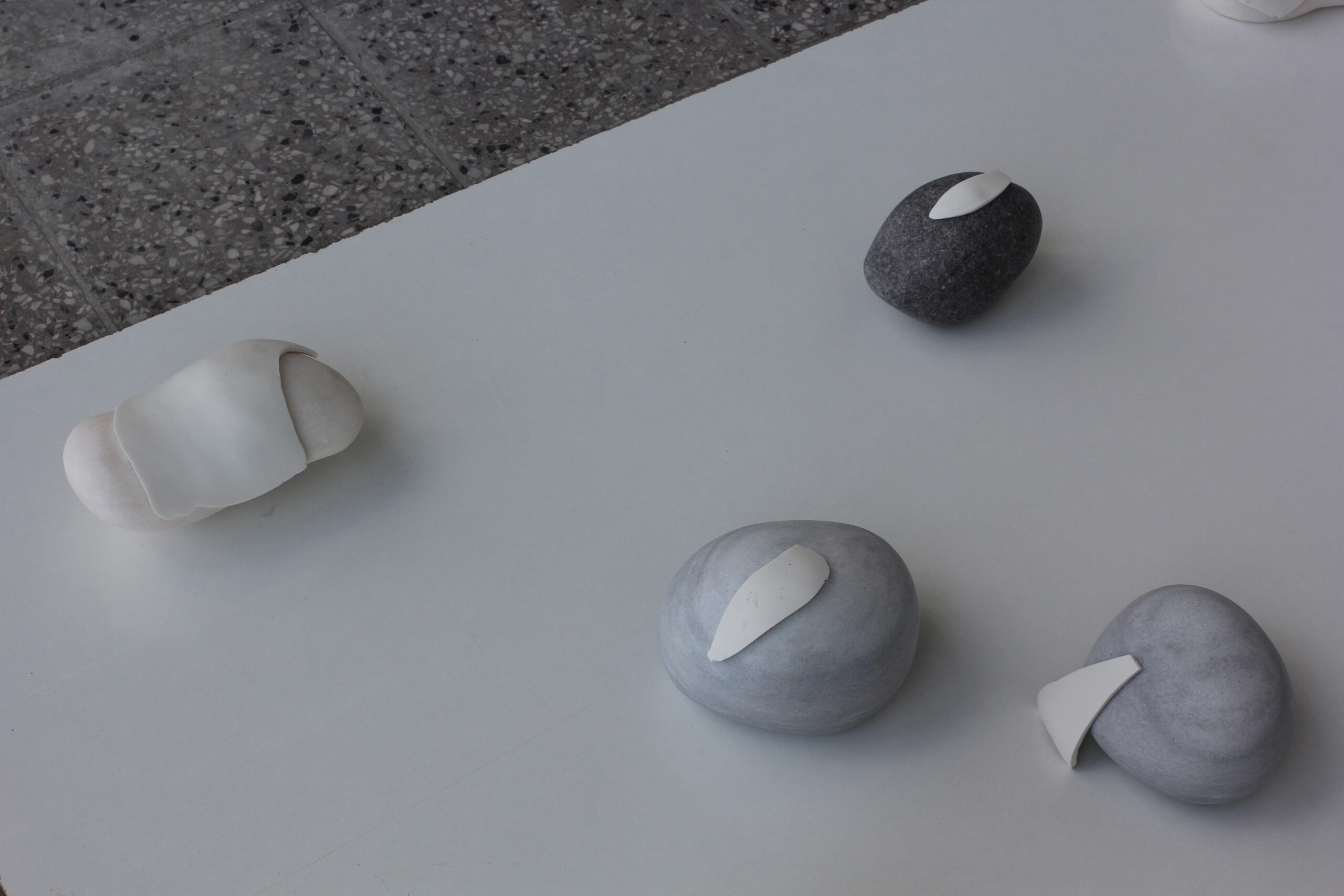
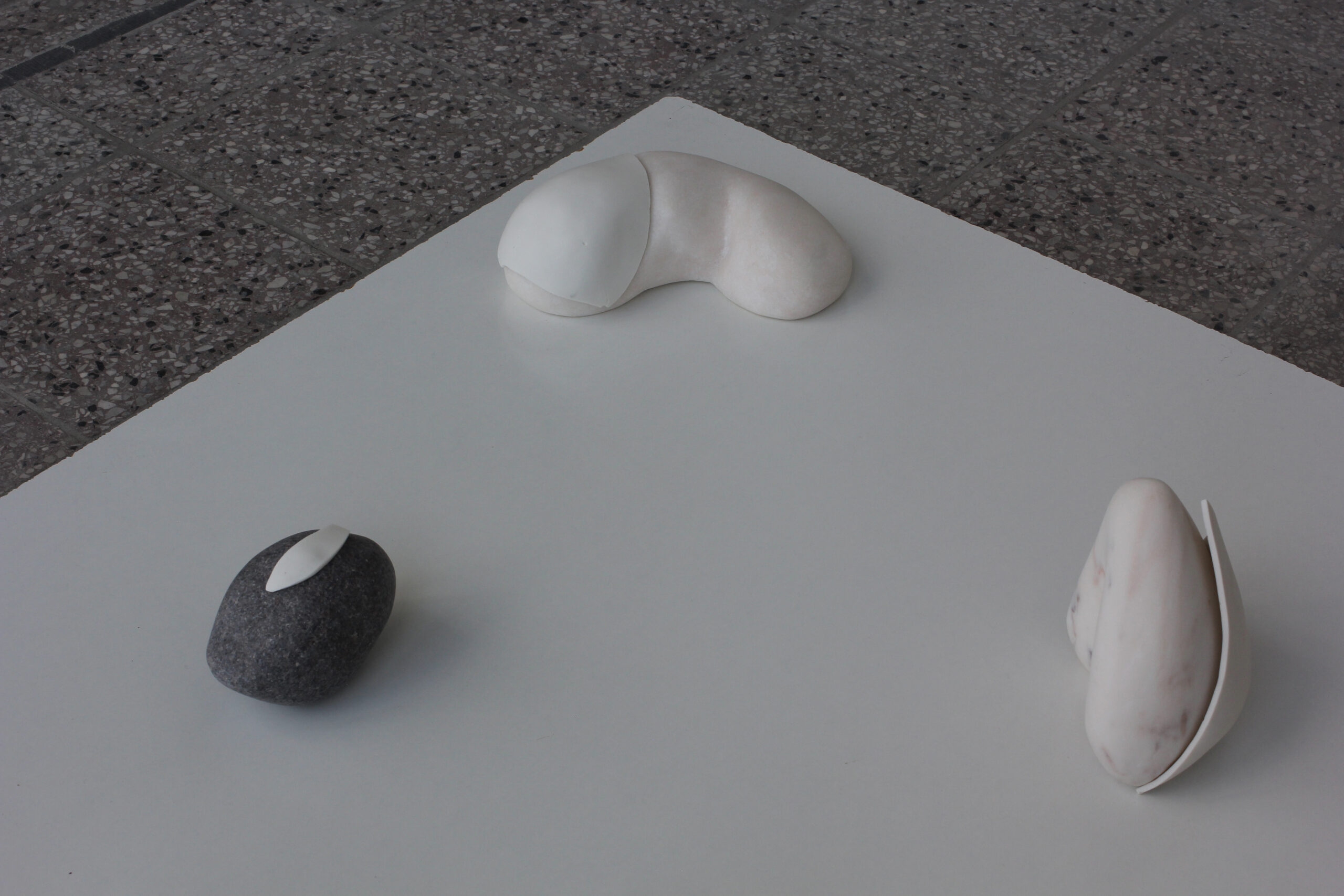
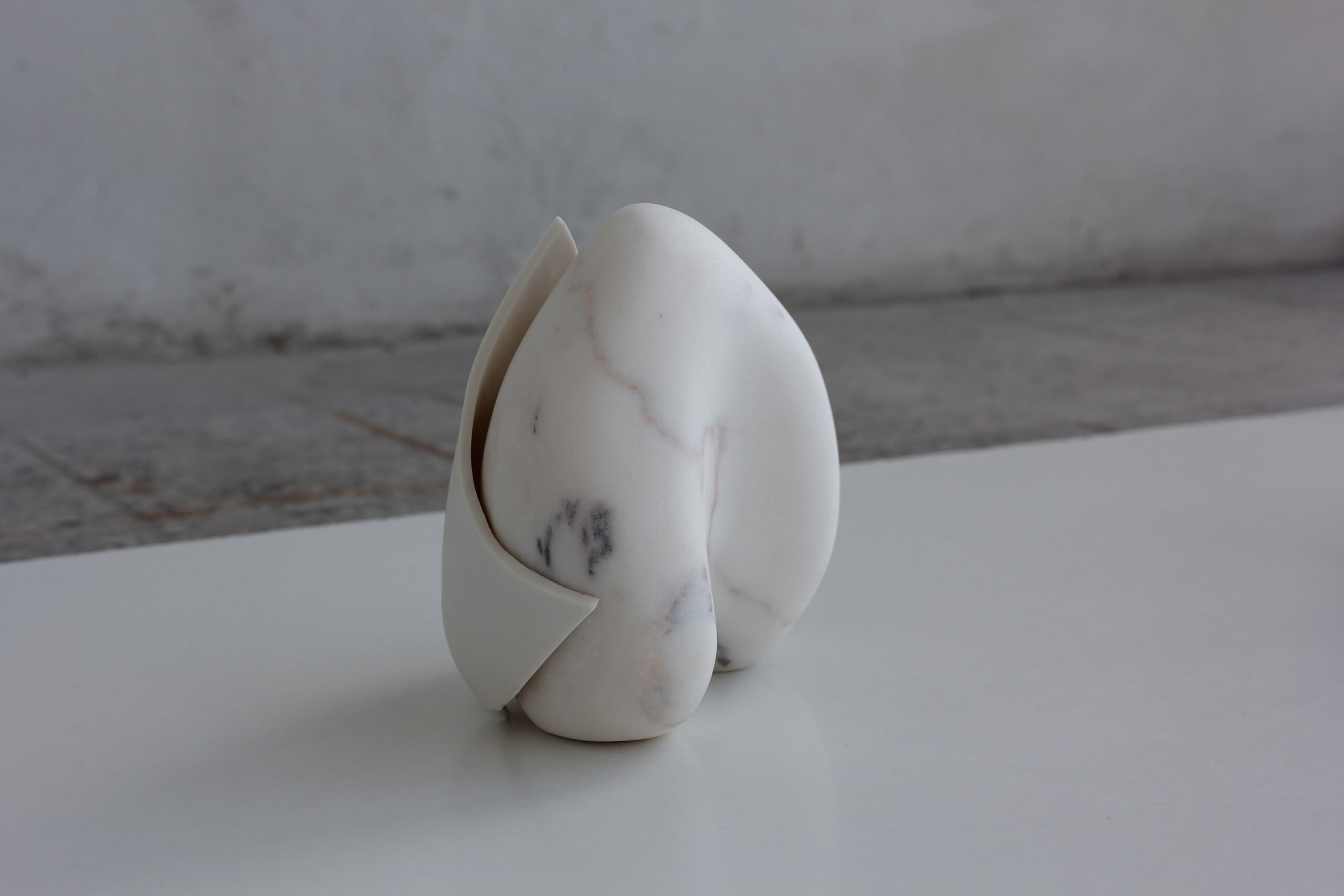
pop x

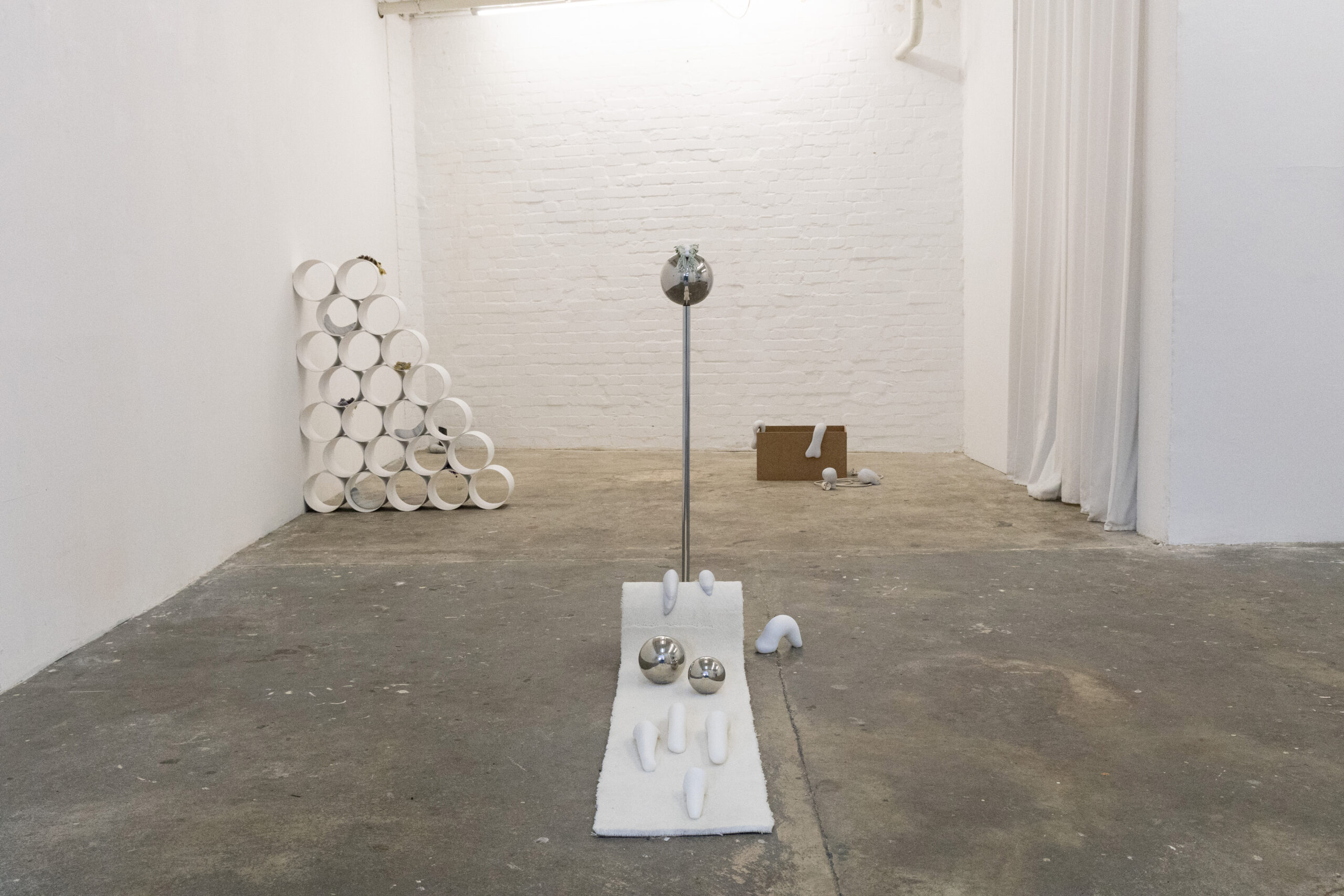
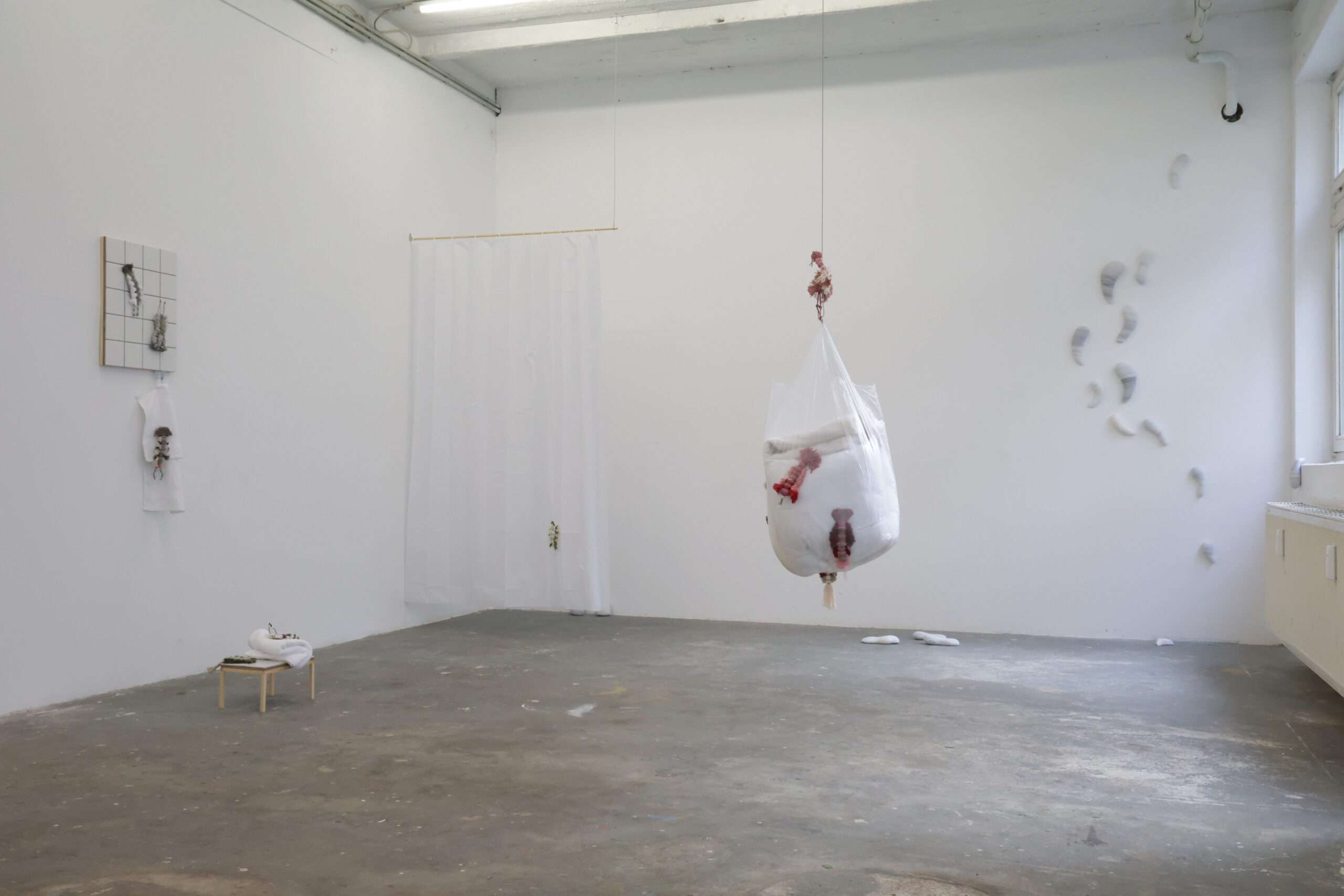
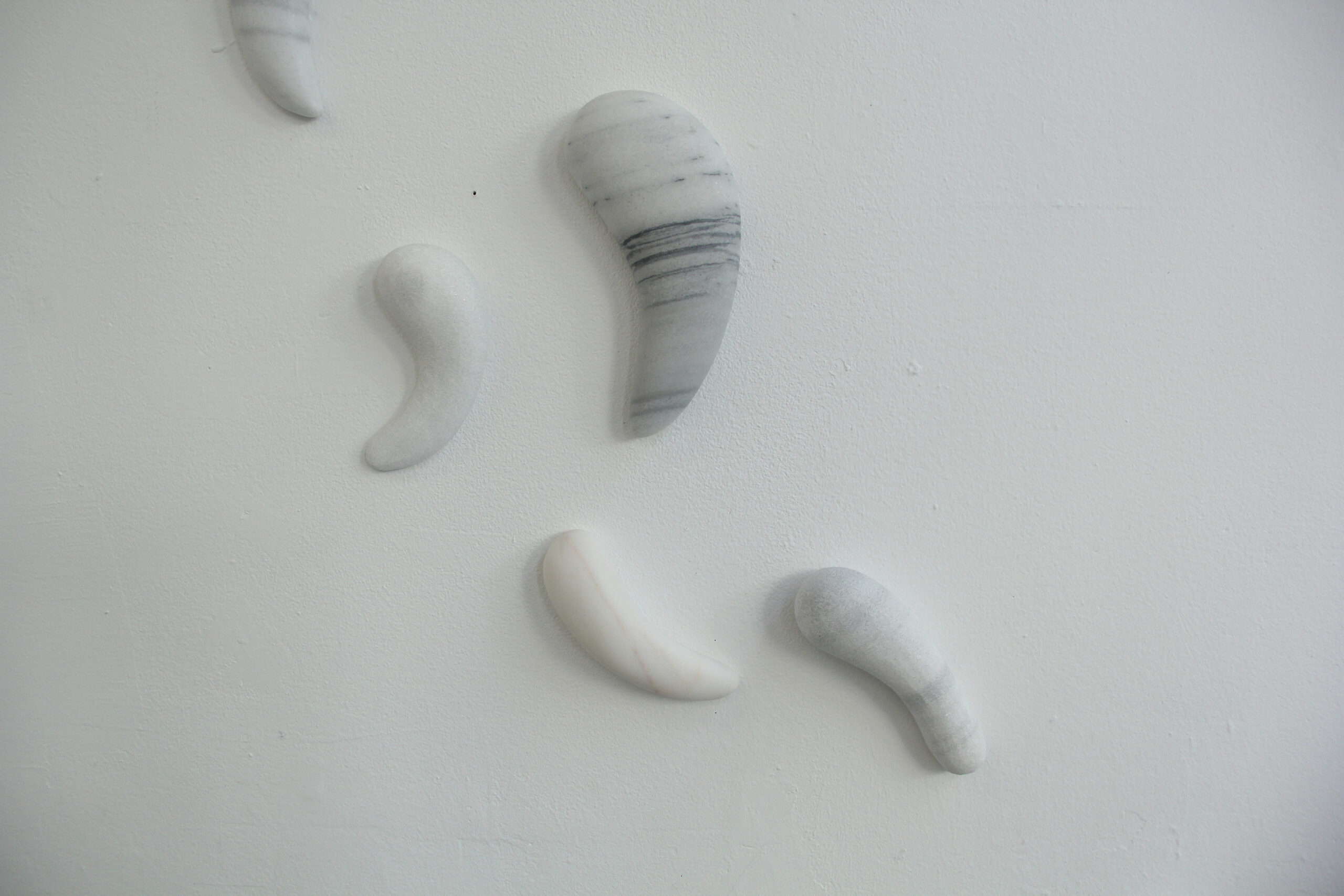
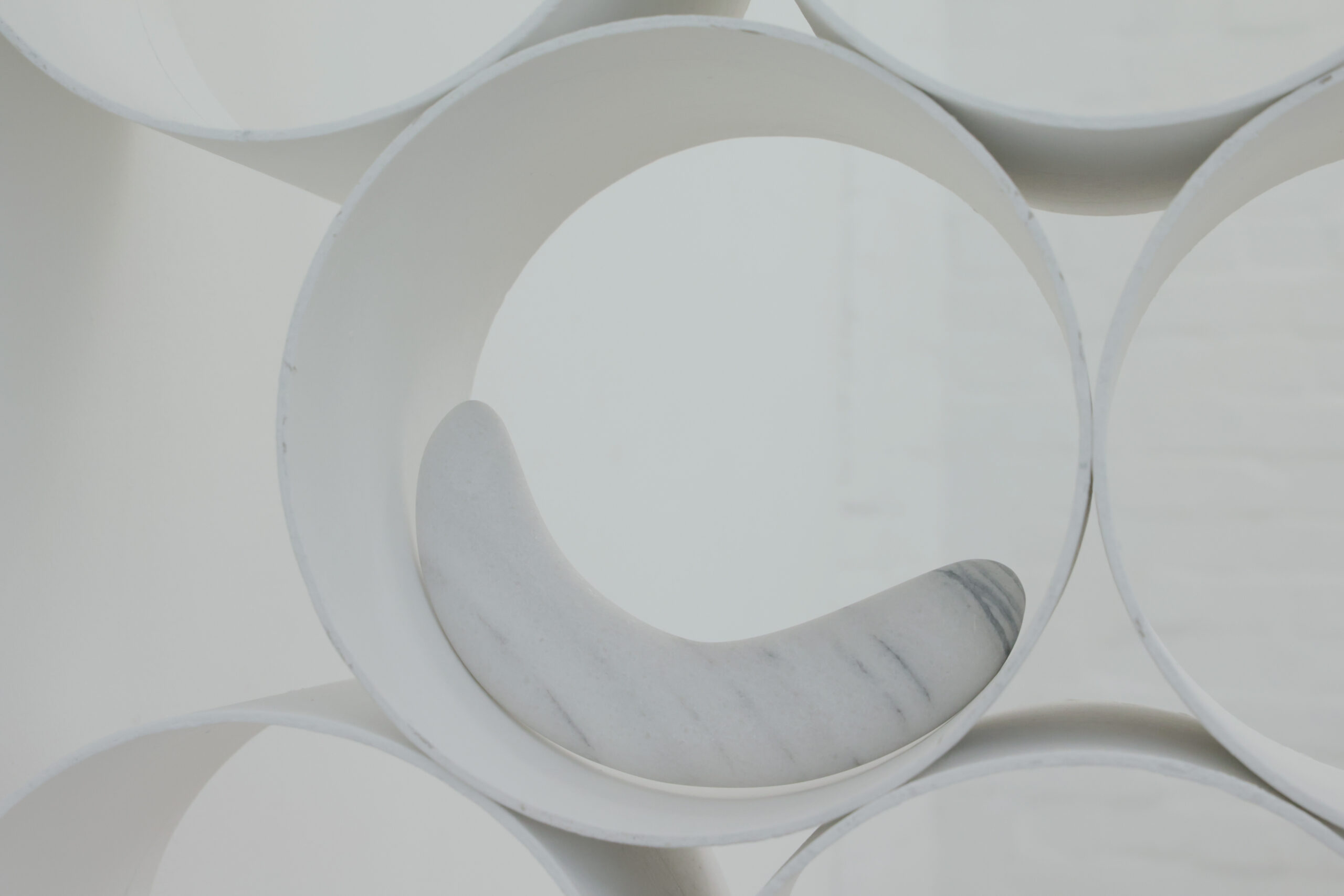
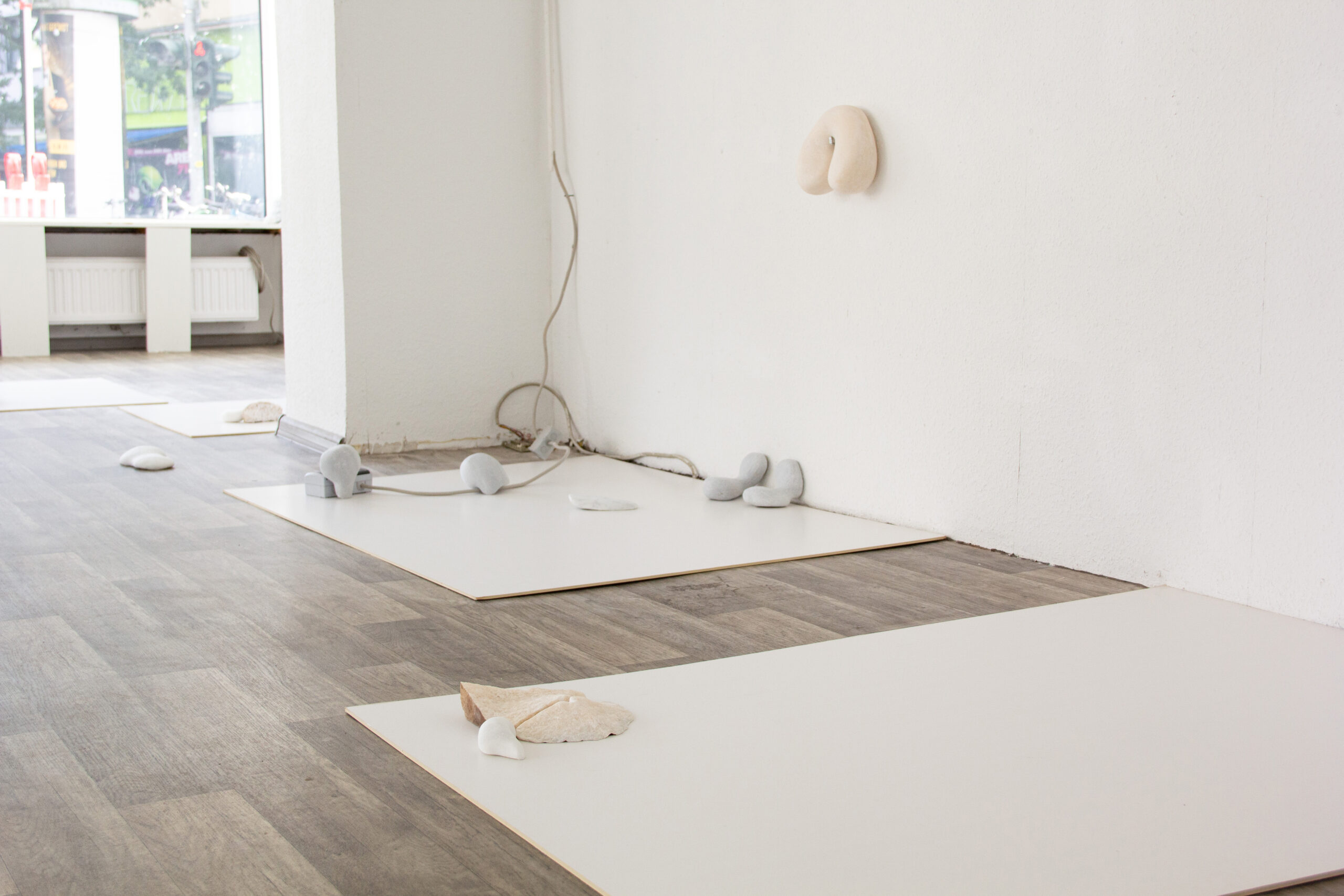
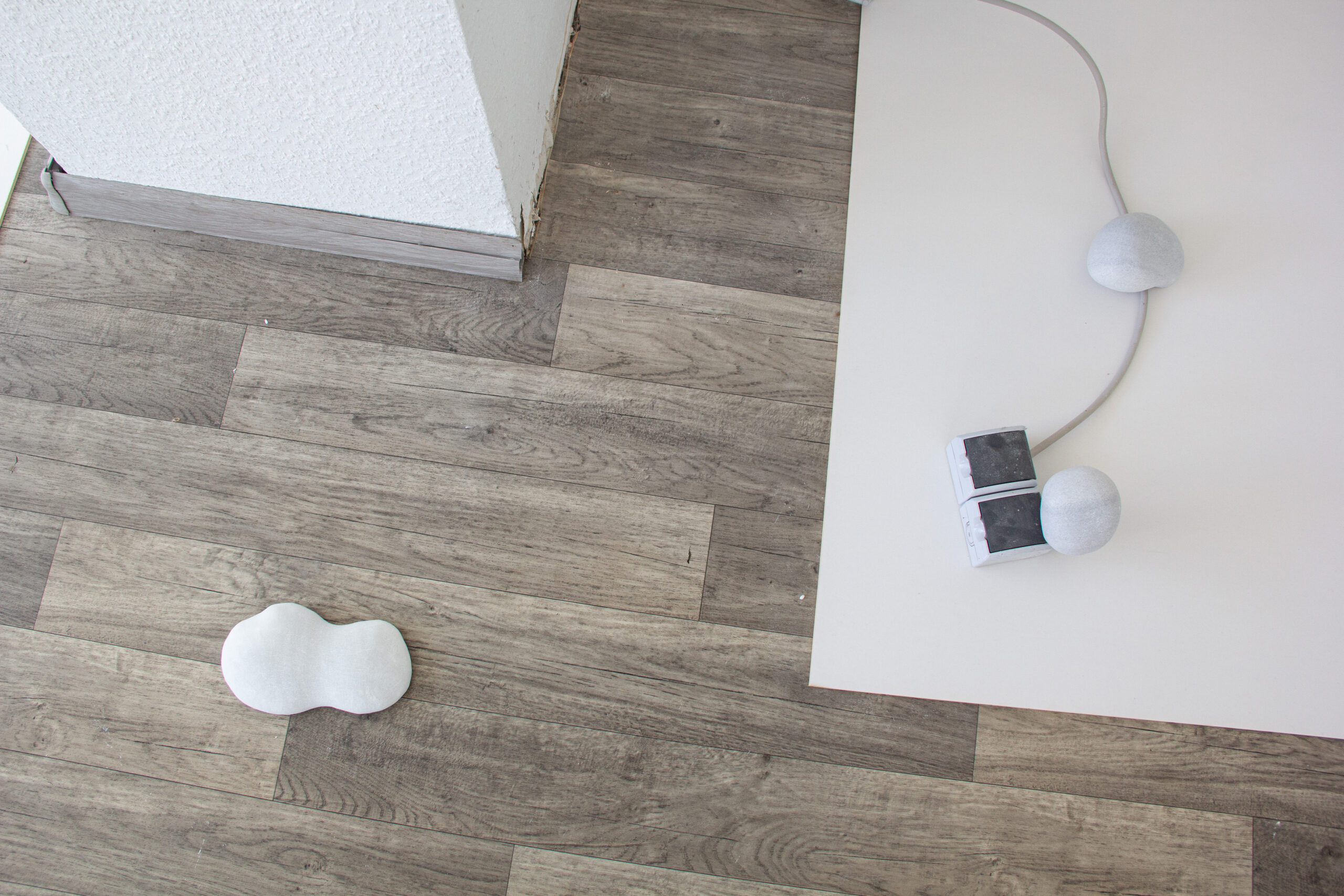
pop x, installation, mixed media, 2026


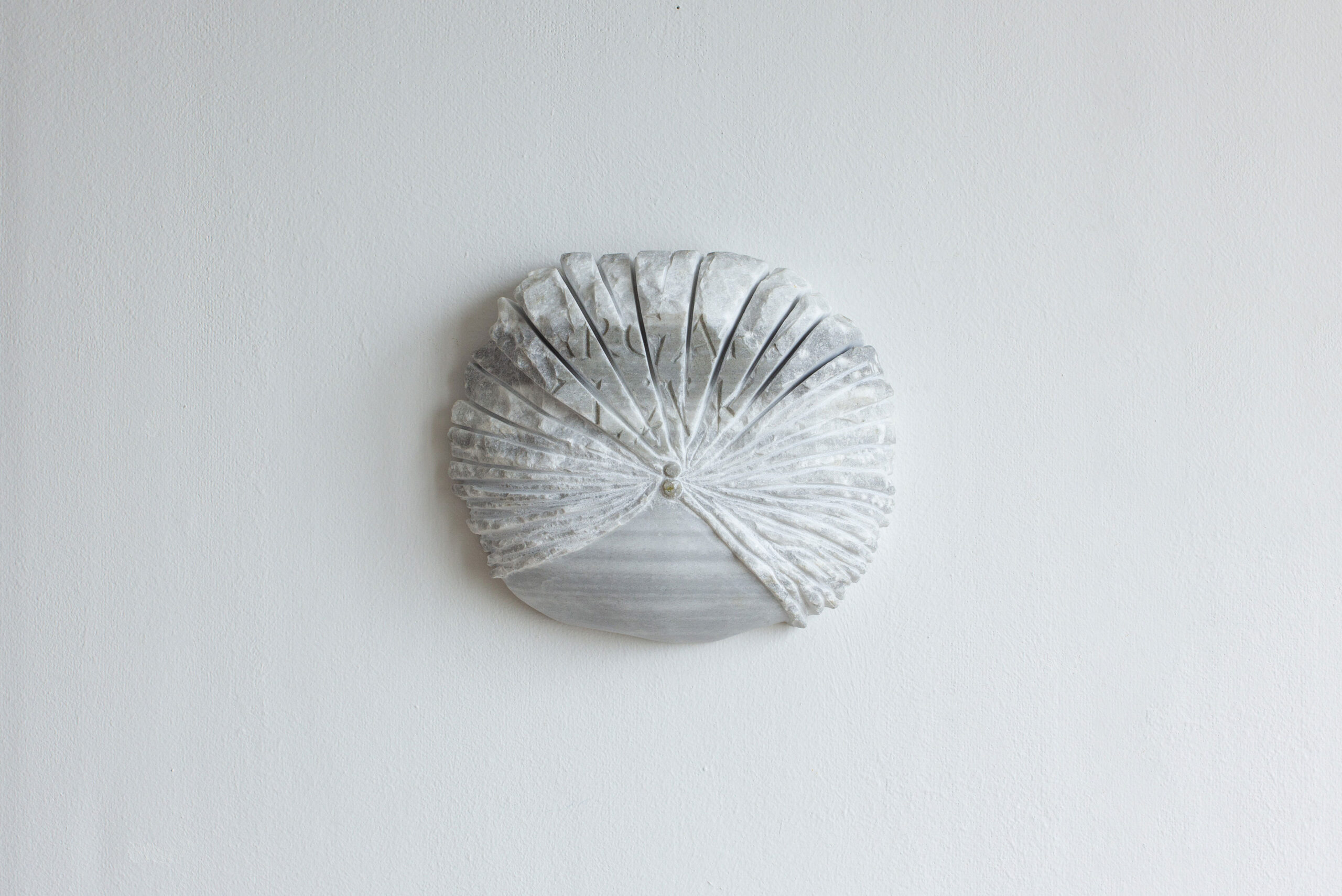
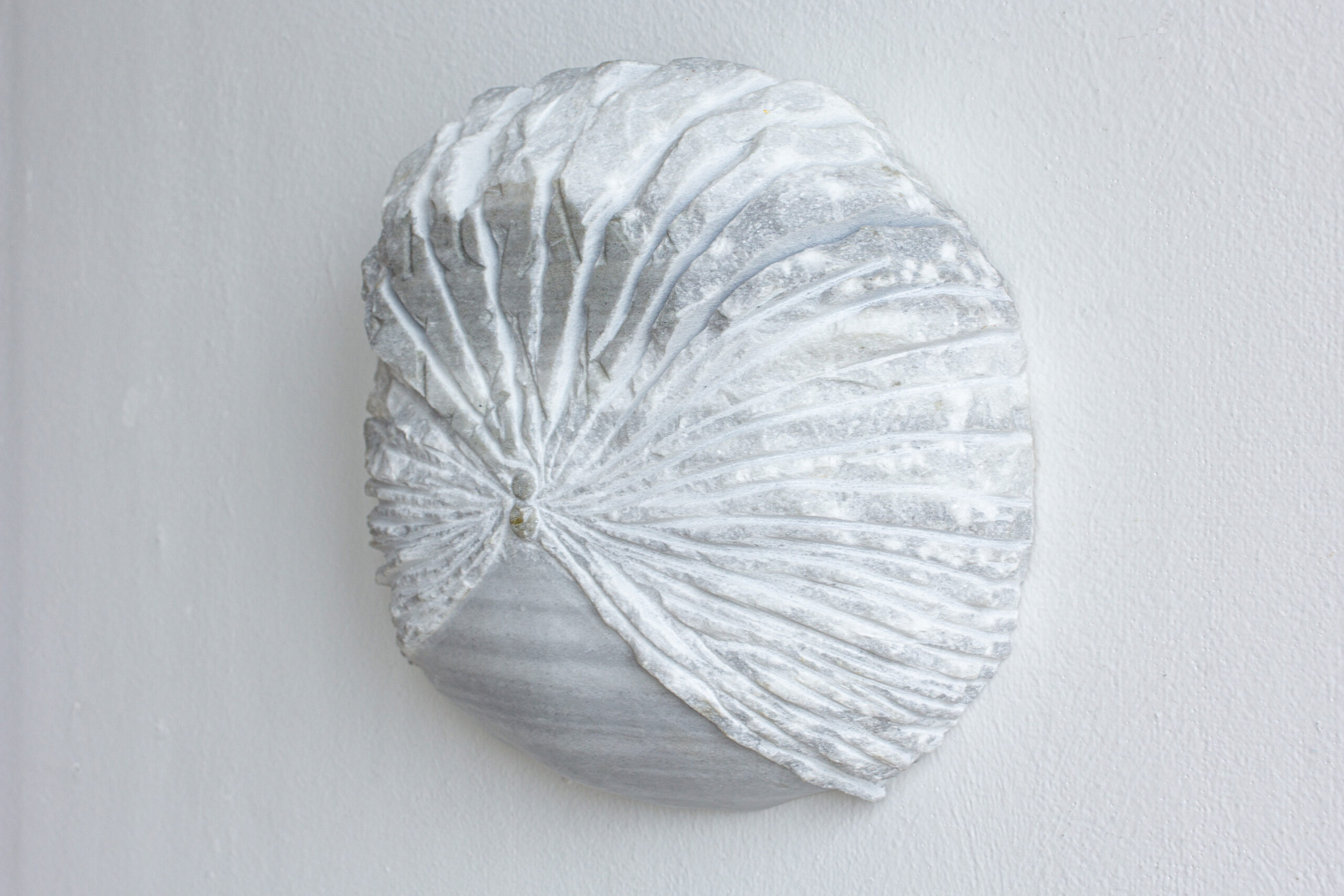
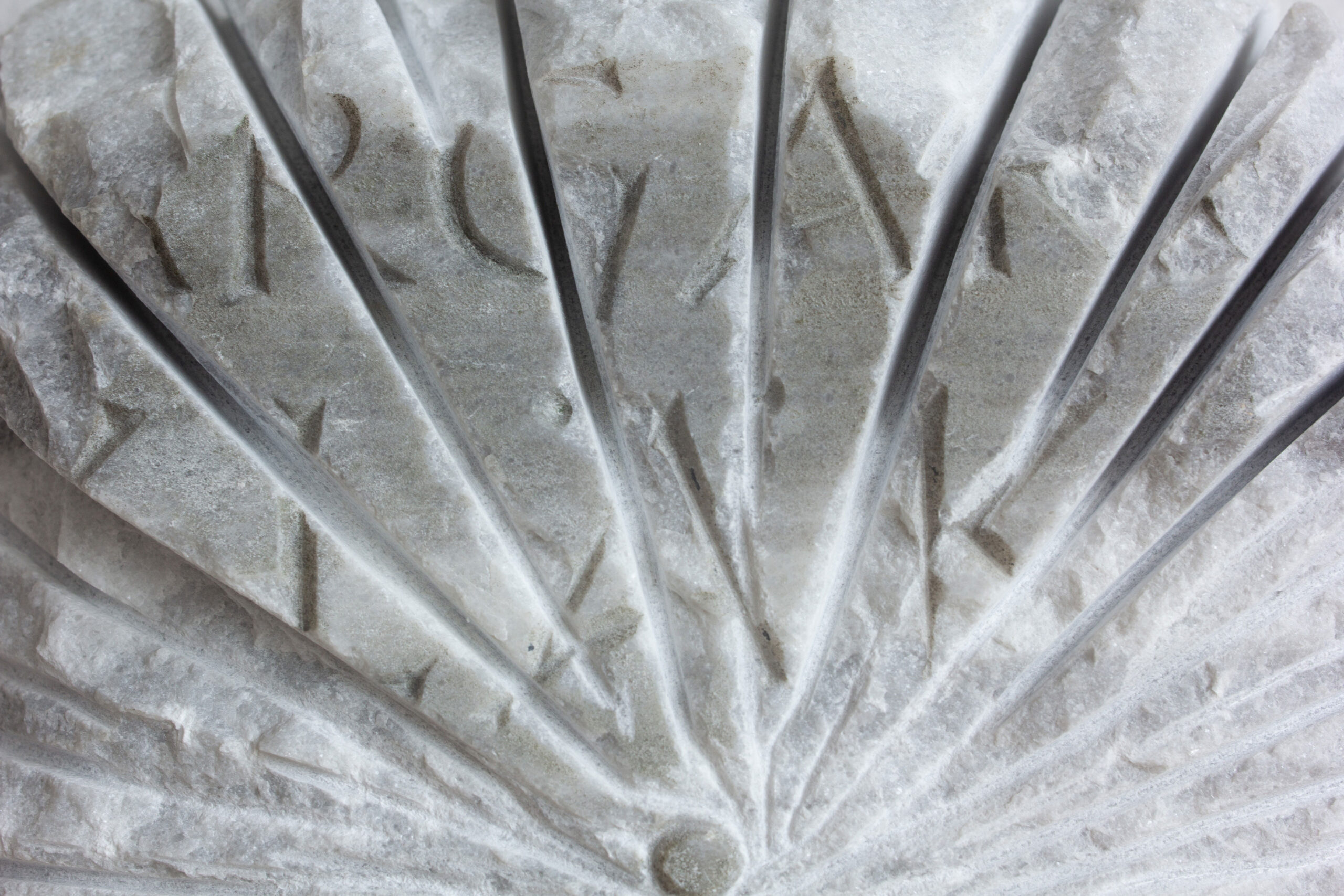
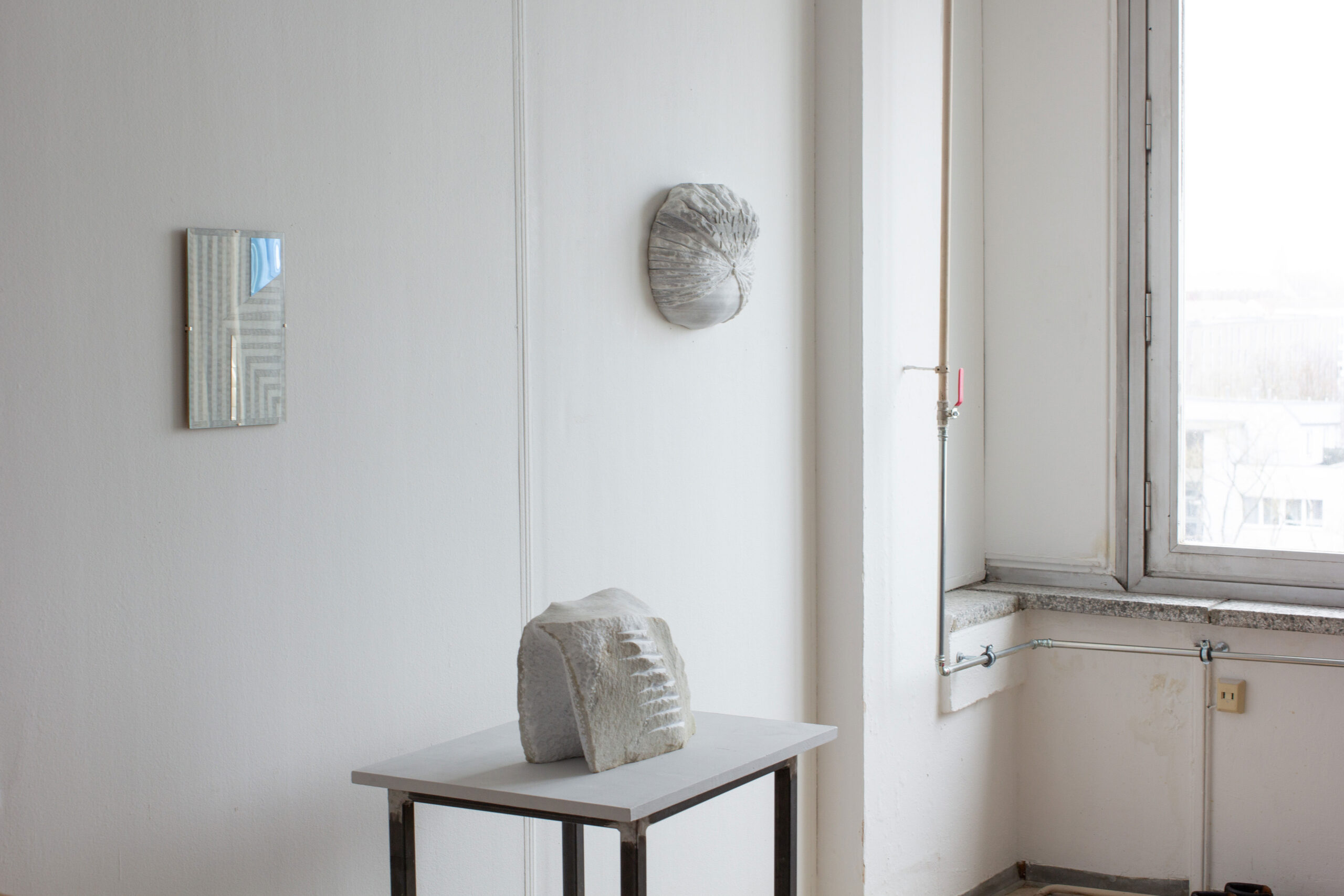
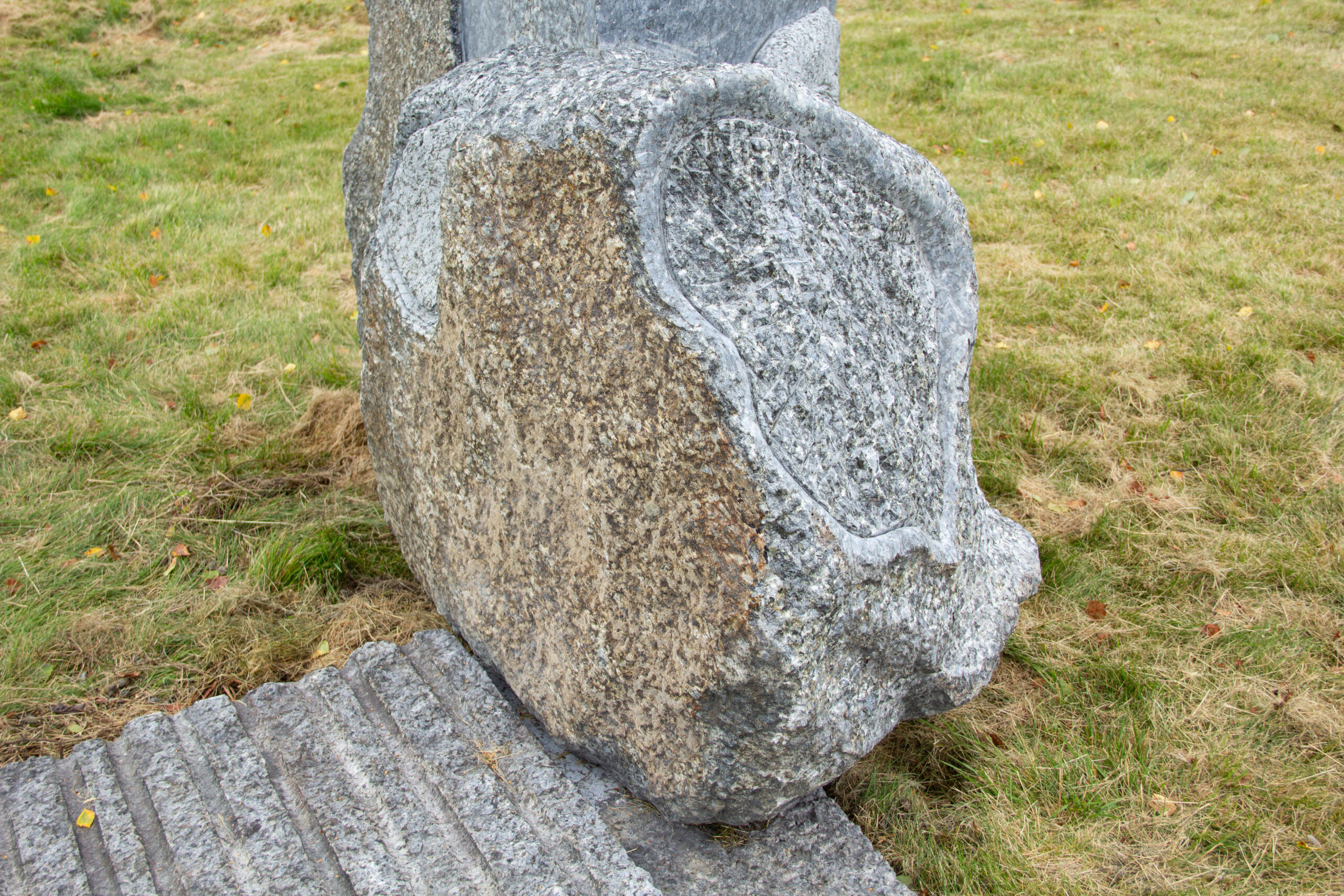
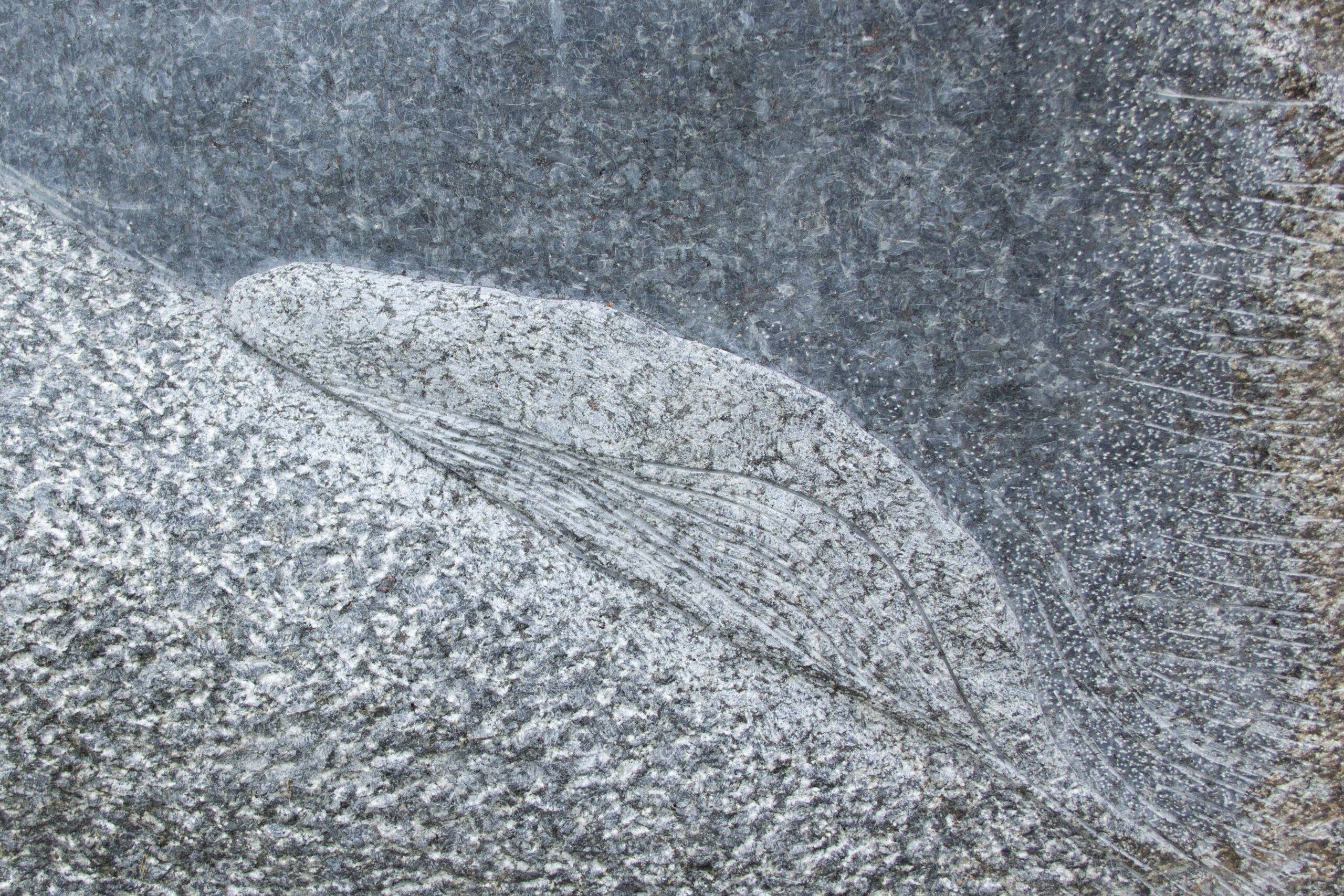
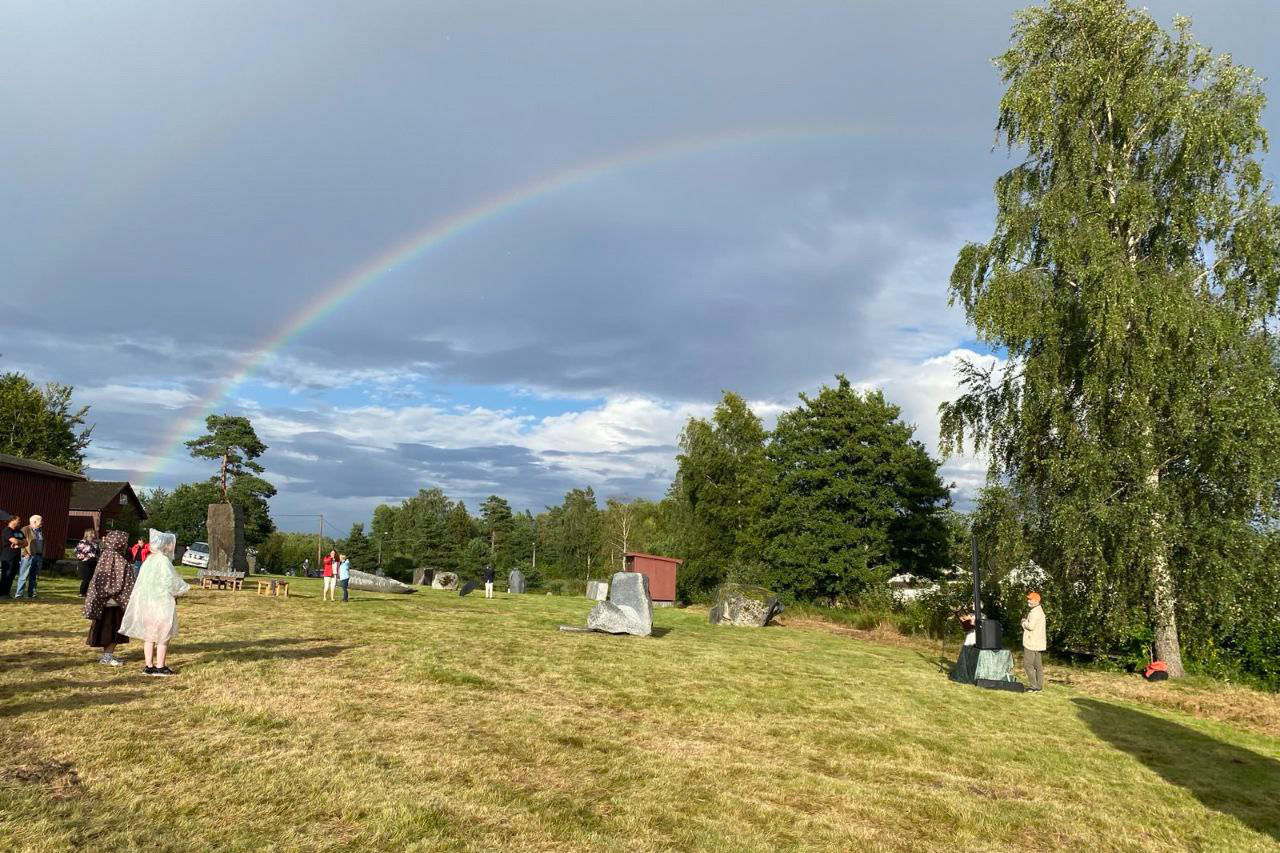
pop x is a process-based spatial installation created by Ernstina Eitner and myself in the project space Dose in Hamburg. It is based on the idea that humans have left their living spaces, while new or different life forms have taken them over. Two distinct populations—Ernstina Eitner’s wool objects and my stone sculptures—expand throughout the space, using materials that evoke traces of former domesticity and transforming them into new habitats. At the beginning of the exhibition, both populations existed separately from one another. Over time, they grew together, approached each other, and eventually met. Instead of displacing one another, they merge and form something new. In doing so, the installation questions our perception of so-called pests and raises questions about space, coexistence, and attribution. Who decides who is allowed to stay and who must leave?

covery

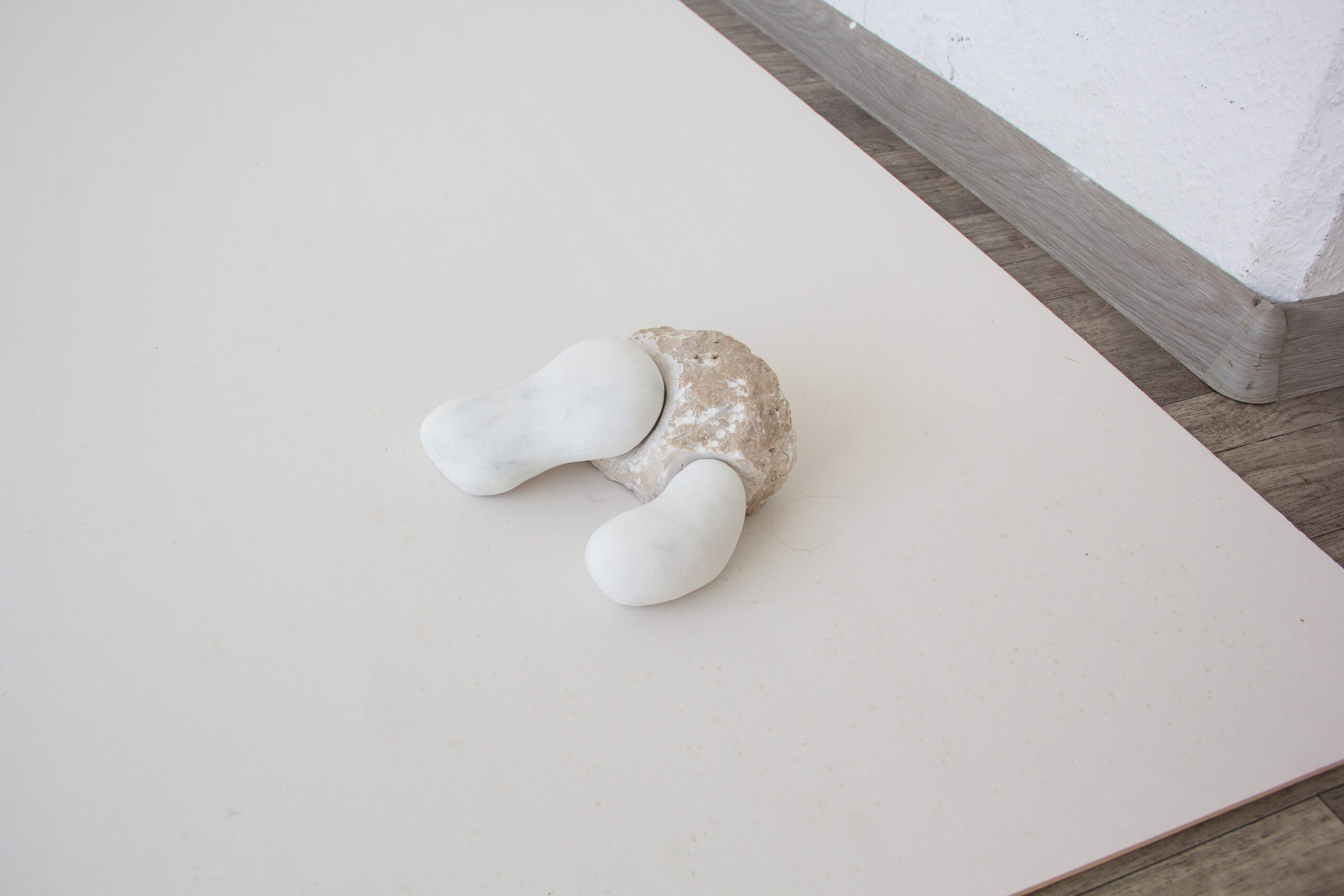
covery, marble, granite, porcelain, variable dimension, 2025


The work explores the ambivalence of two bodies: one that holds, and one that is covered. It reflects the tension between saftey and tightness, protection and weight, proximity and limitation.

new life

new life, installation, marble, basalt, variable dimension, 2025


This installation was created as part of the bremerhaven artspace Festival, where I was given an empty shop space to work with. I filled the room with round, soft, moving stone forms that spread like a new population. A posthuman, utopian scenario emerged in which a new life form enters a formerly purely functional human space, takes it over, and breaks free from its assigned role, while forming new structures.

Carry

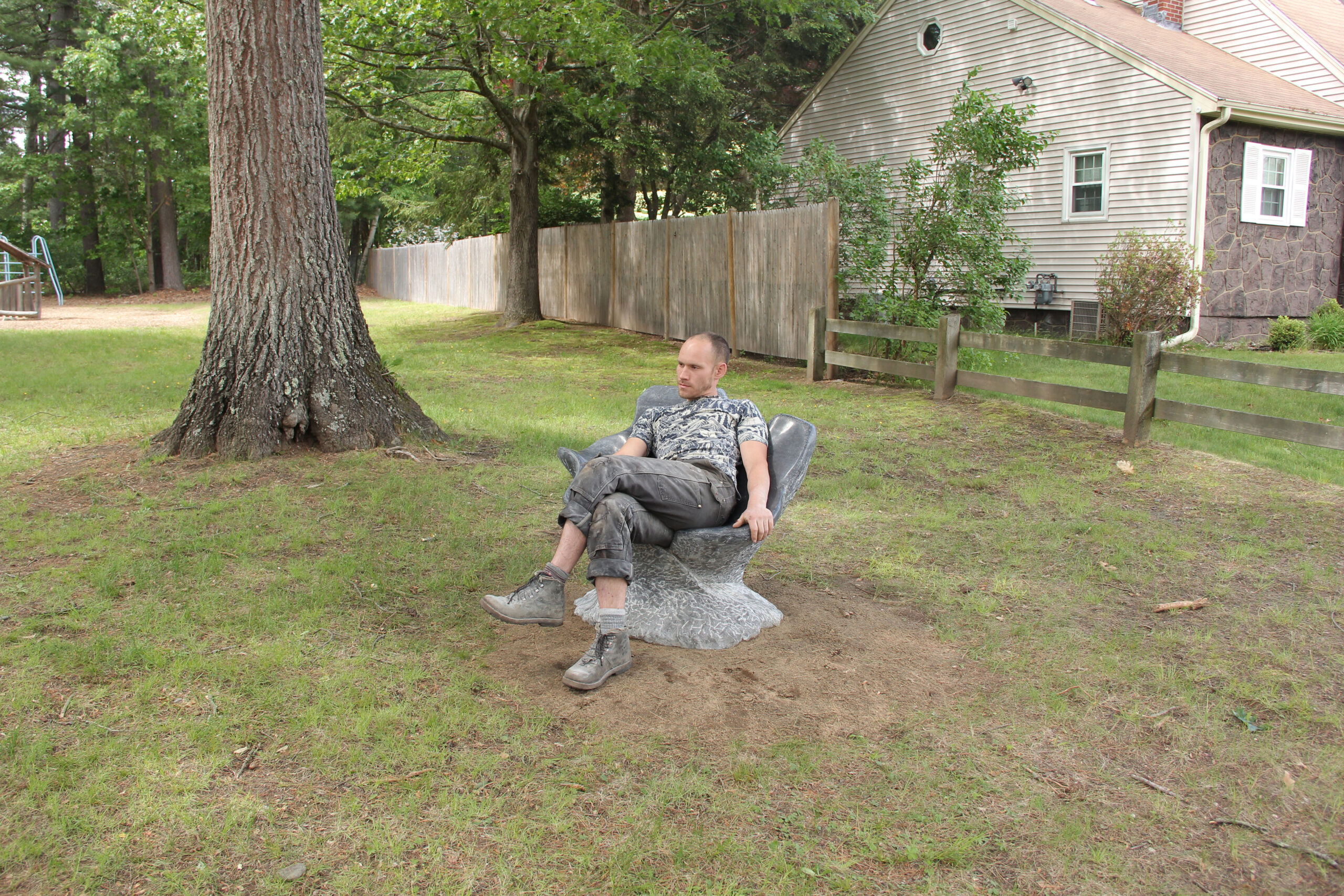
Carry, limestone, 80 x 95 x 90 cm, 2025


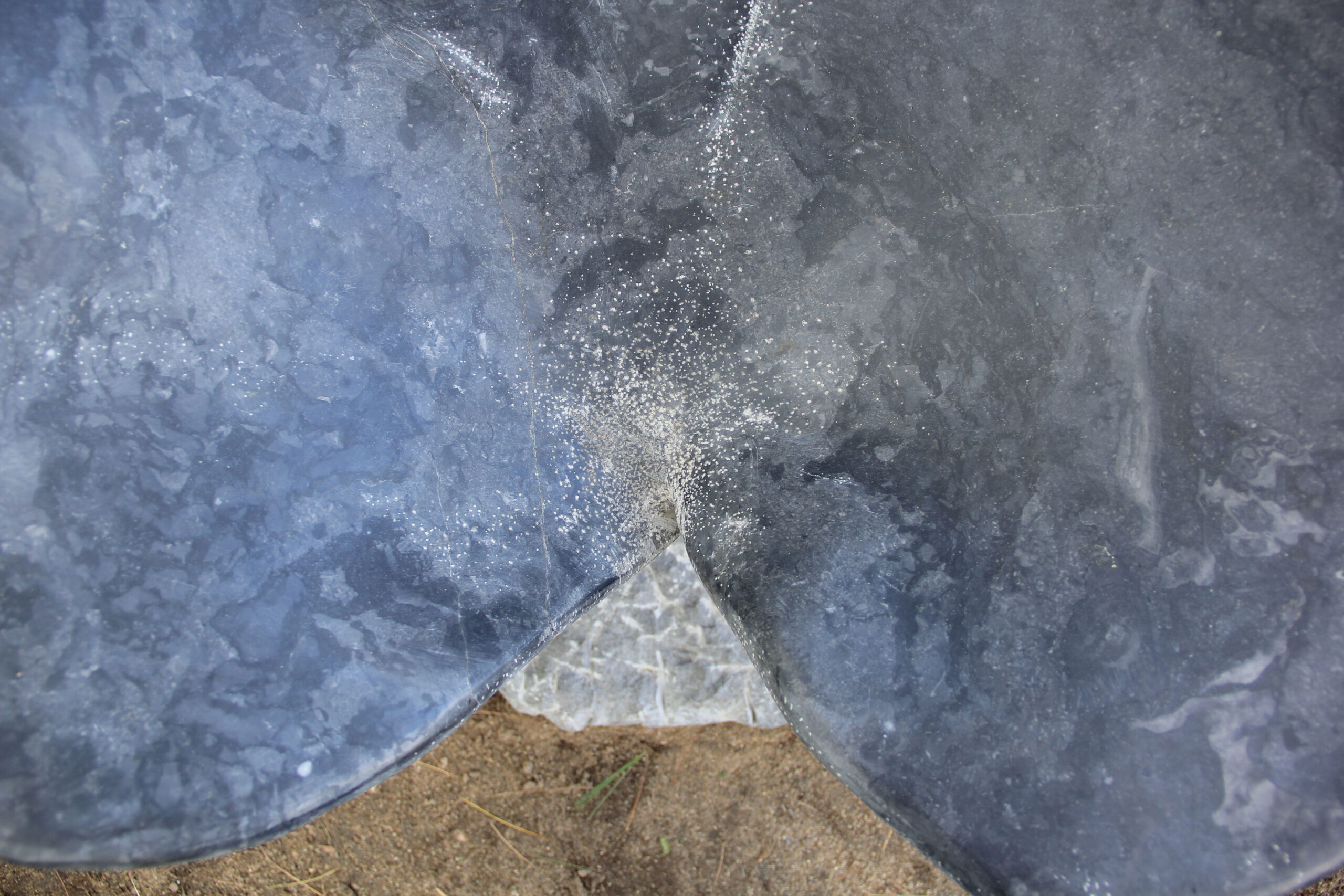
The sculpture rises like a blossom or a leaf, unfolding into a protective, dynamic surface. Take a seat, have a rest, feel the material. The black, rough stone transforms into a soft, flowing form – a shape that holds you, that carries you.

the base III

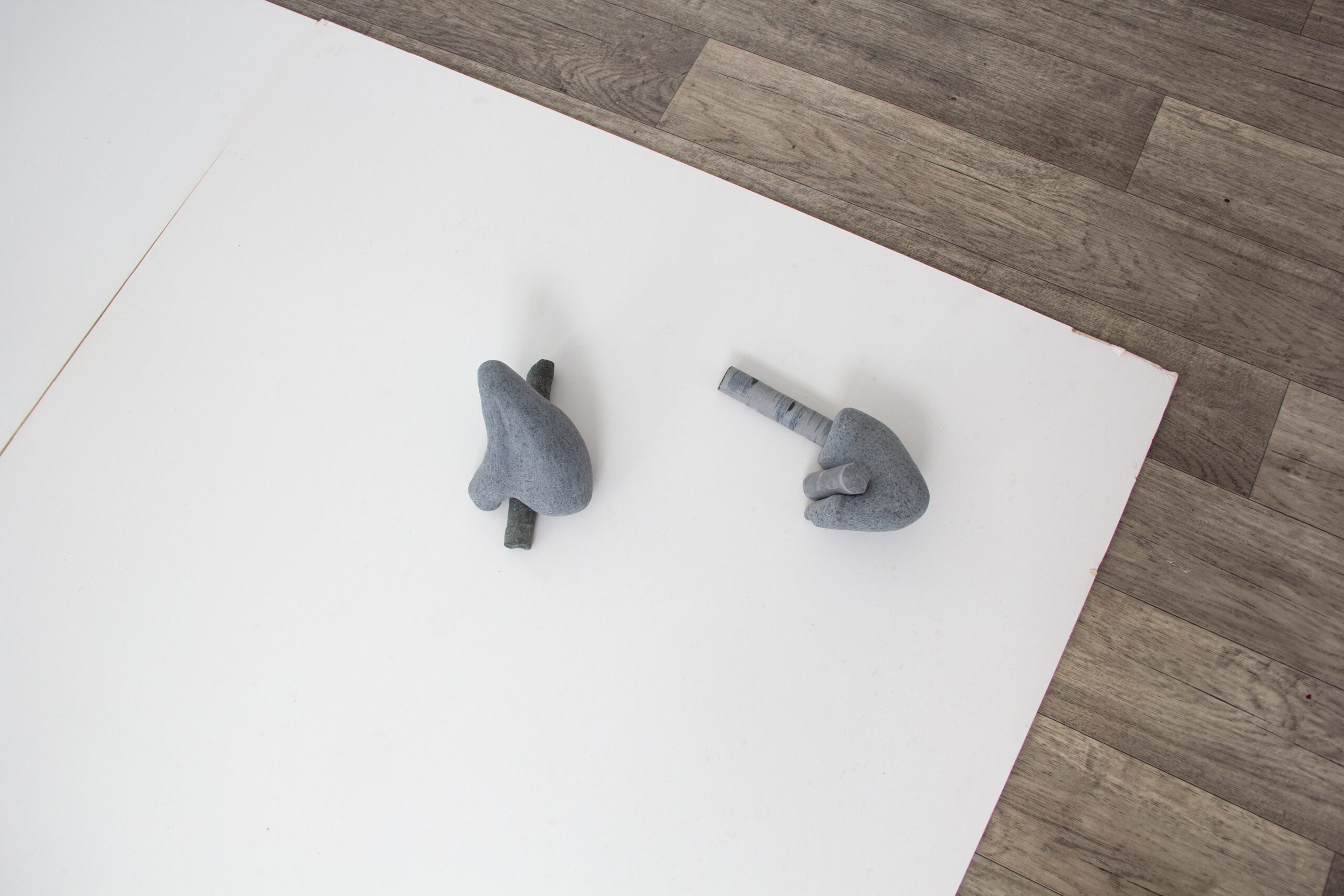
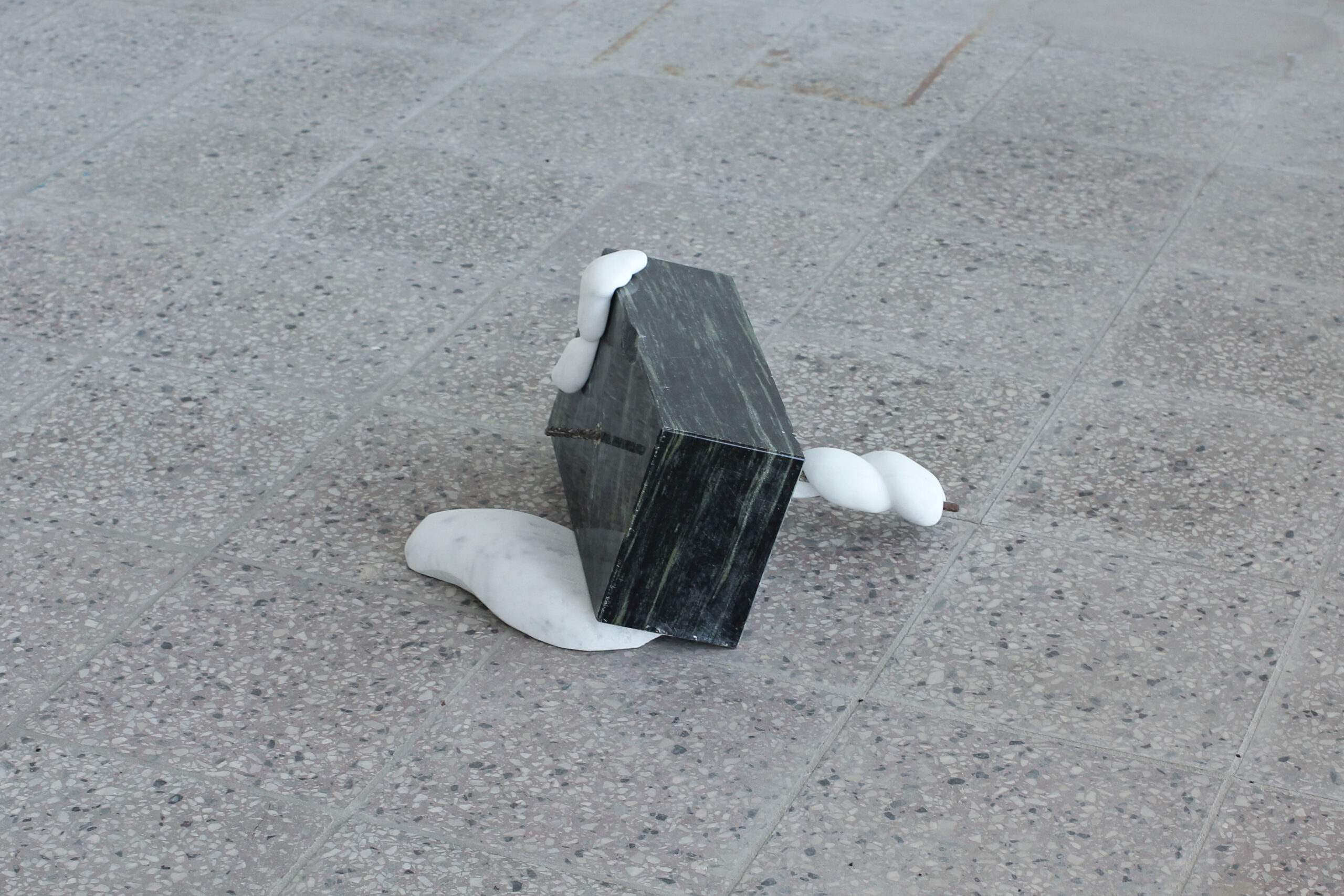
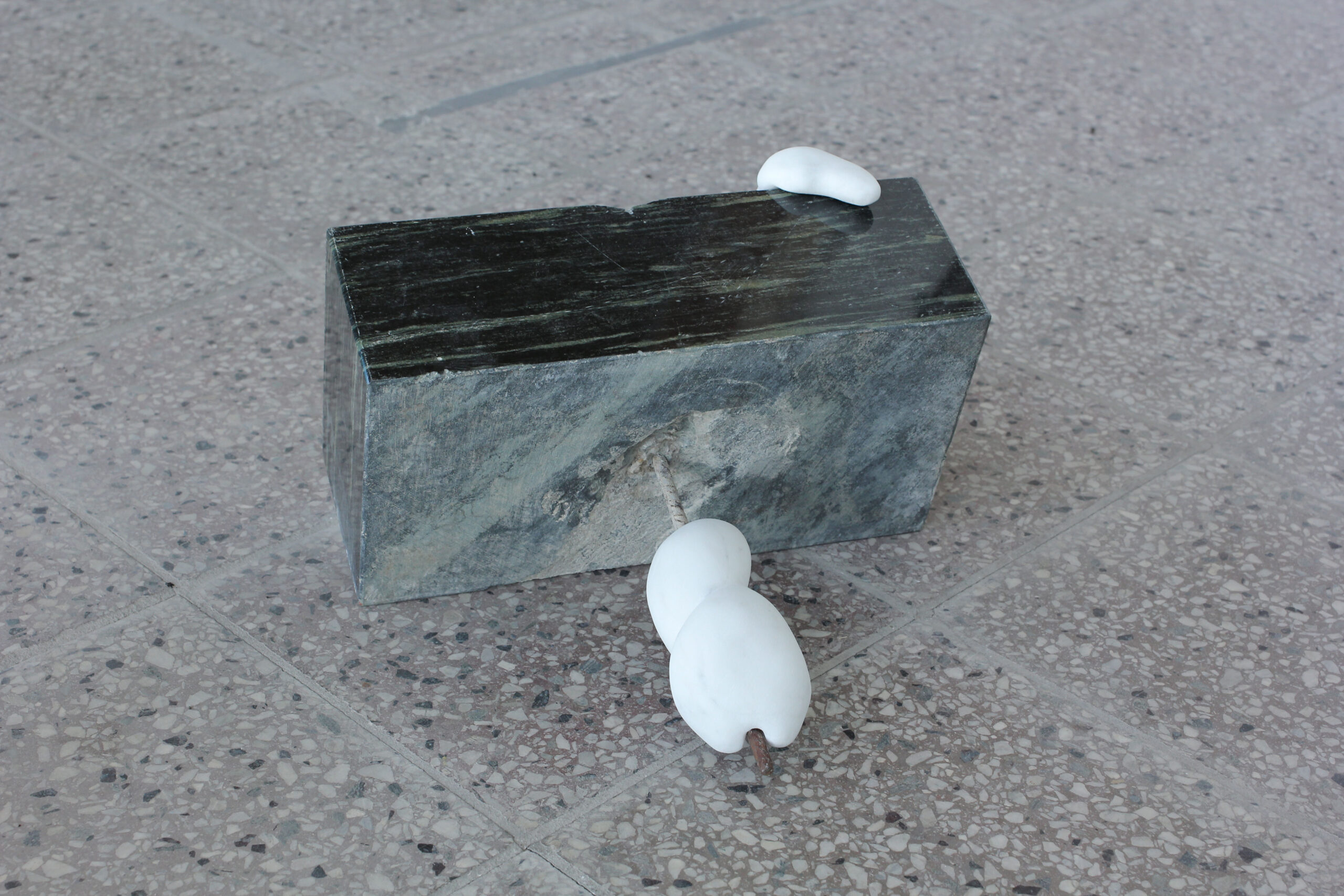
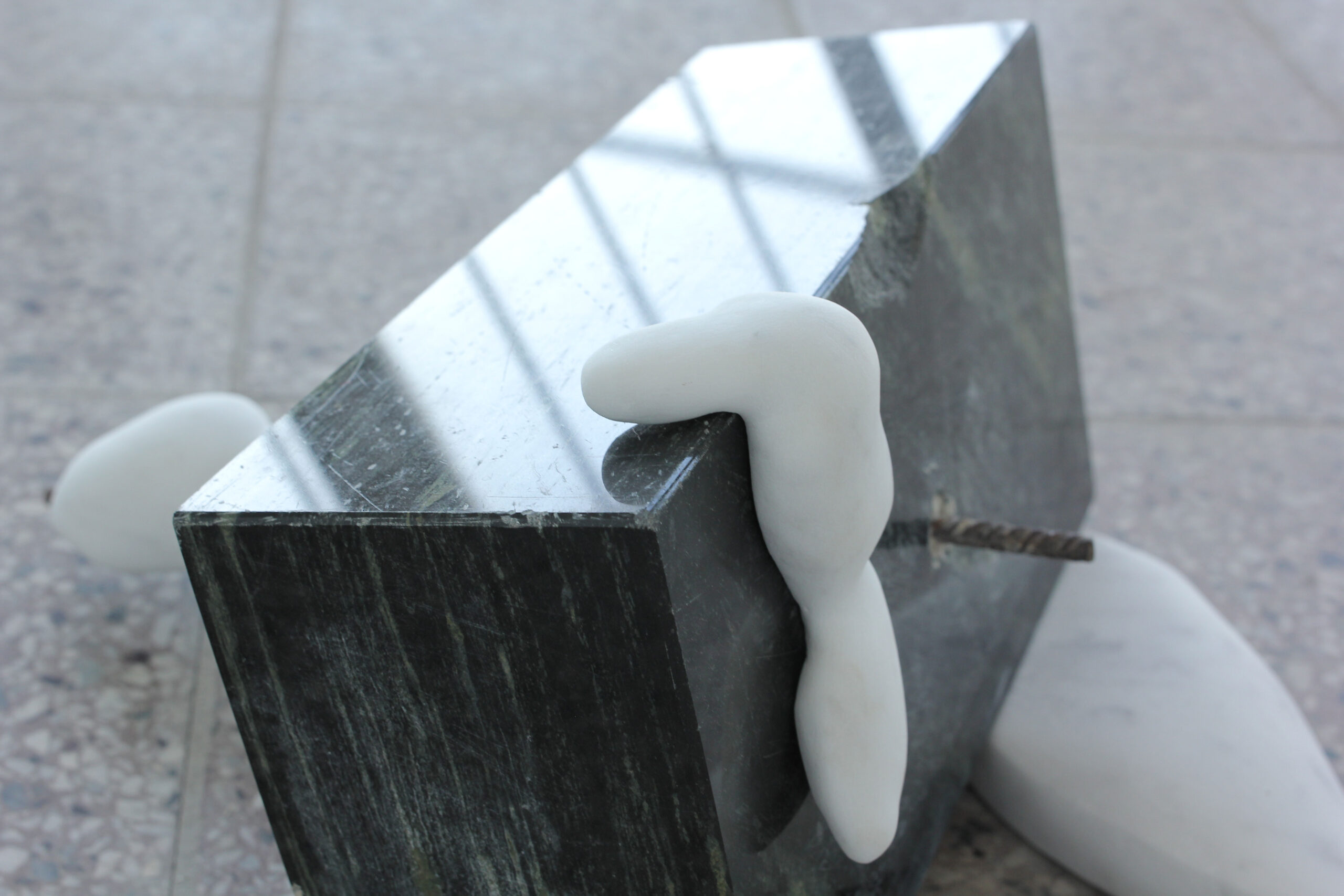
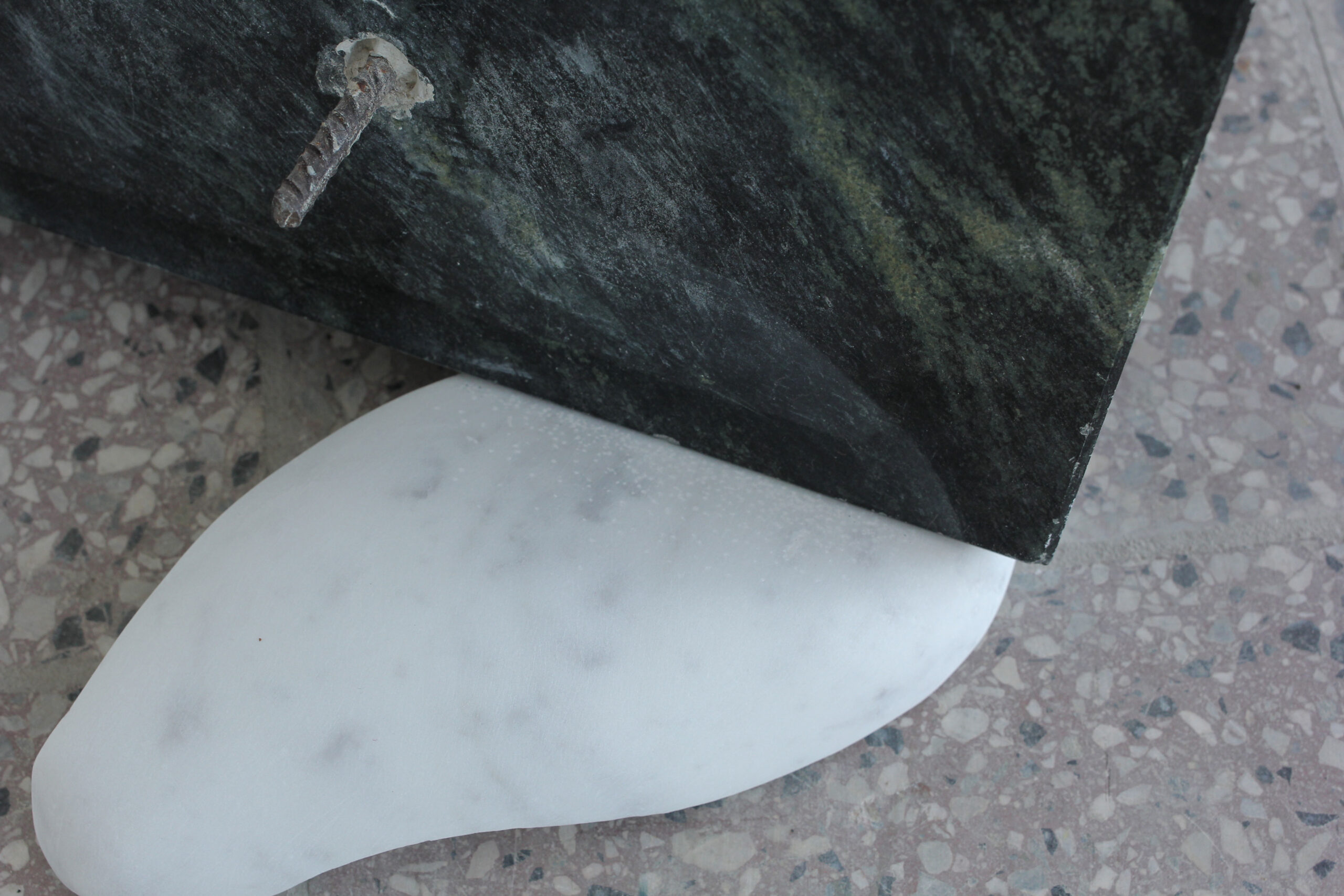
the base III, serpentinit, marble, steel, 35,5 x 50 x 23 cm, 2025


The materials I use in the base II and III are found fragments – primarily discarded gravestones and their pedestals that have been removed from cemeteries. My artistic approach plays with the original function of these found objects and places them in a new context. They speak of decay and oblivion, of once-significant monuments that now serve no purpose. They are like remnants from the era of humanity, slowly transforming into something new or remaining passive until they are overlaid and absorbed by new entities.

the base II

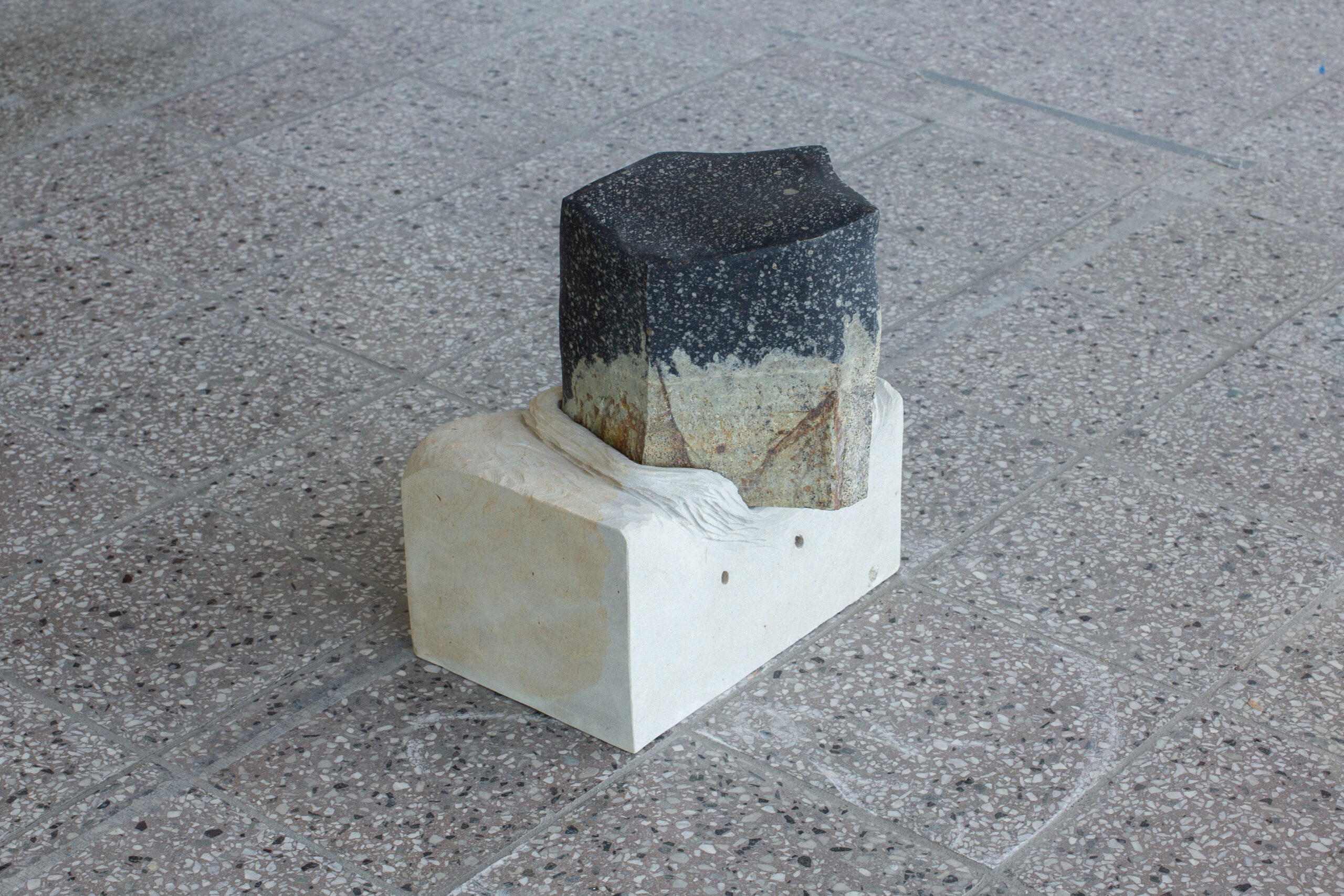
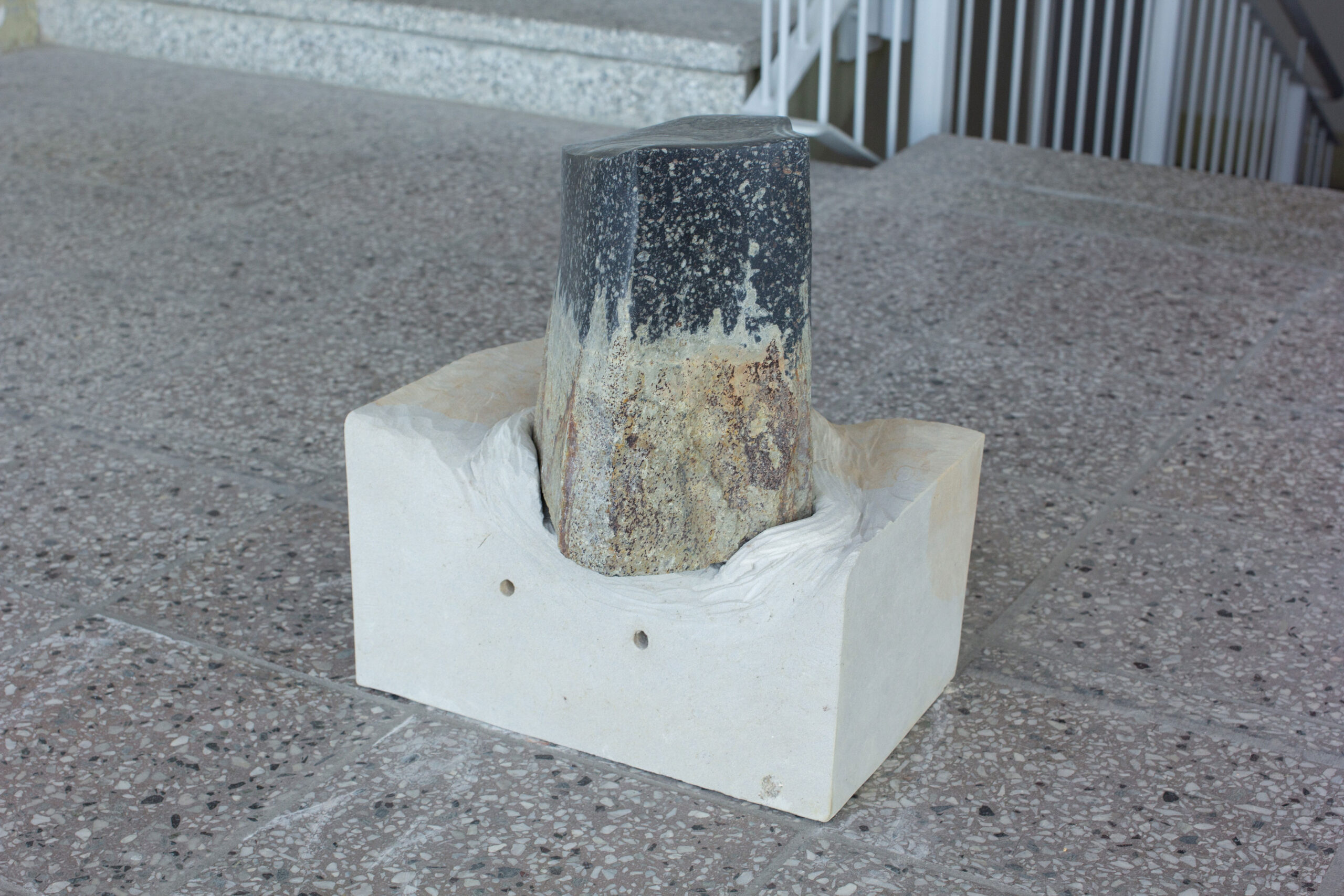
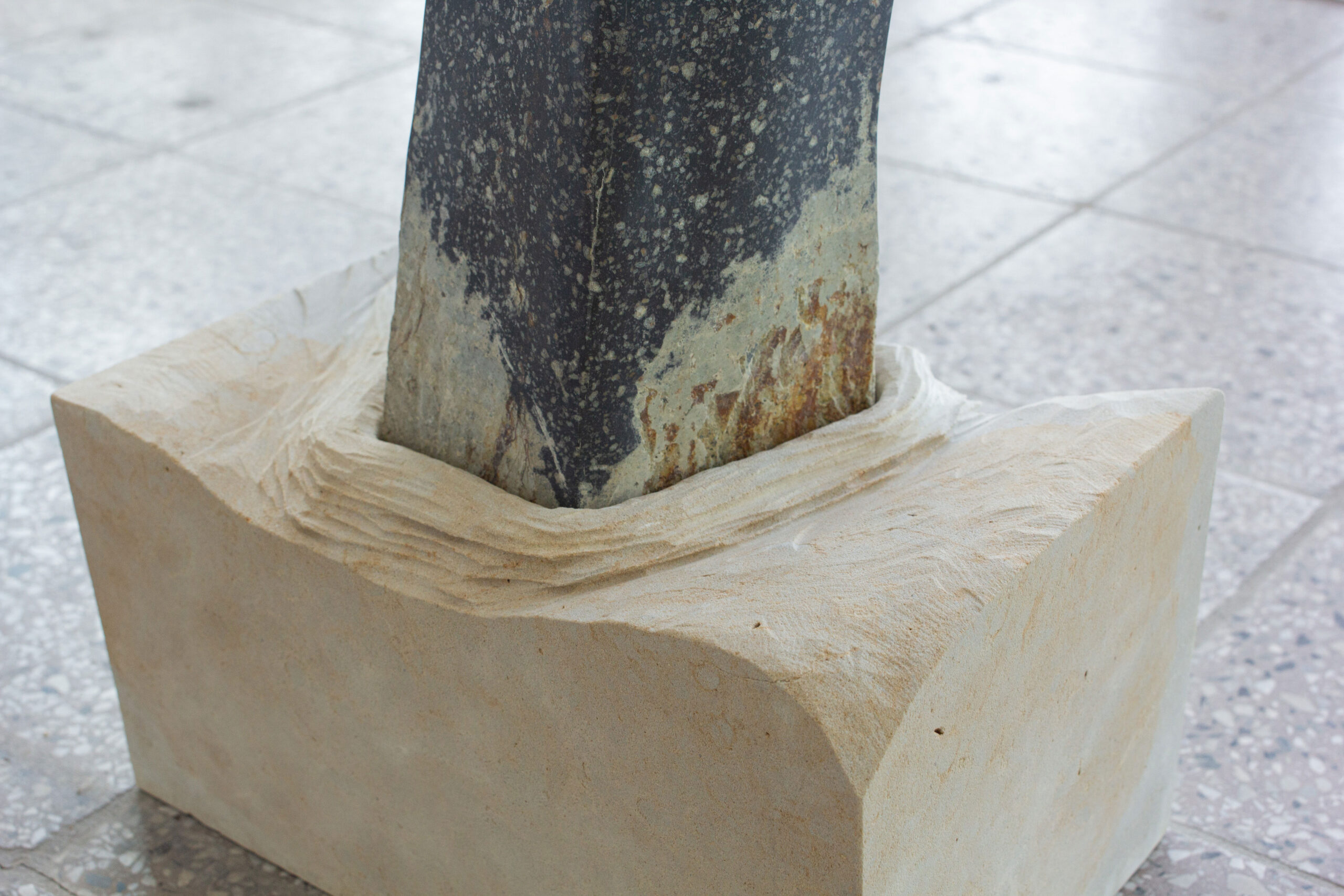
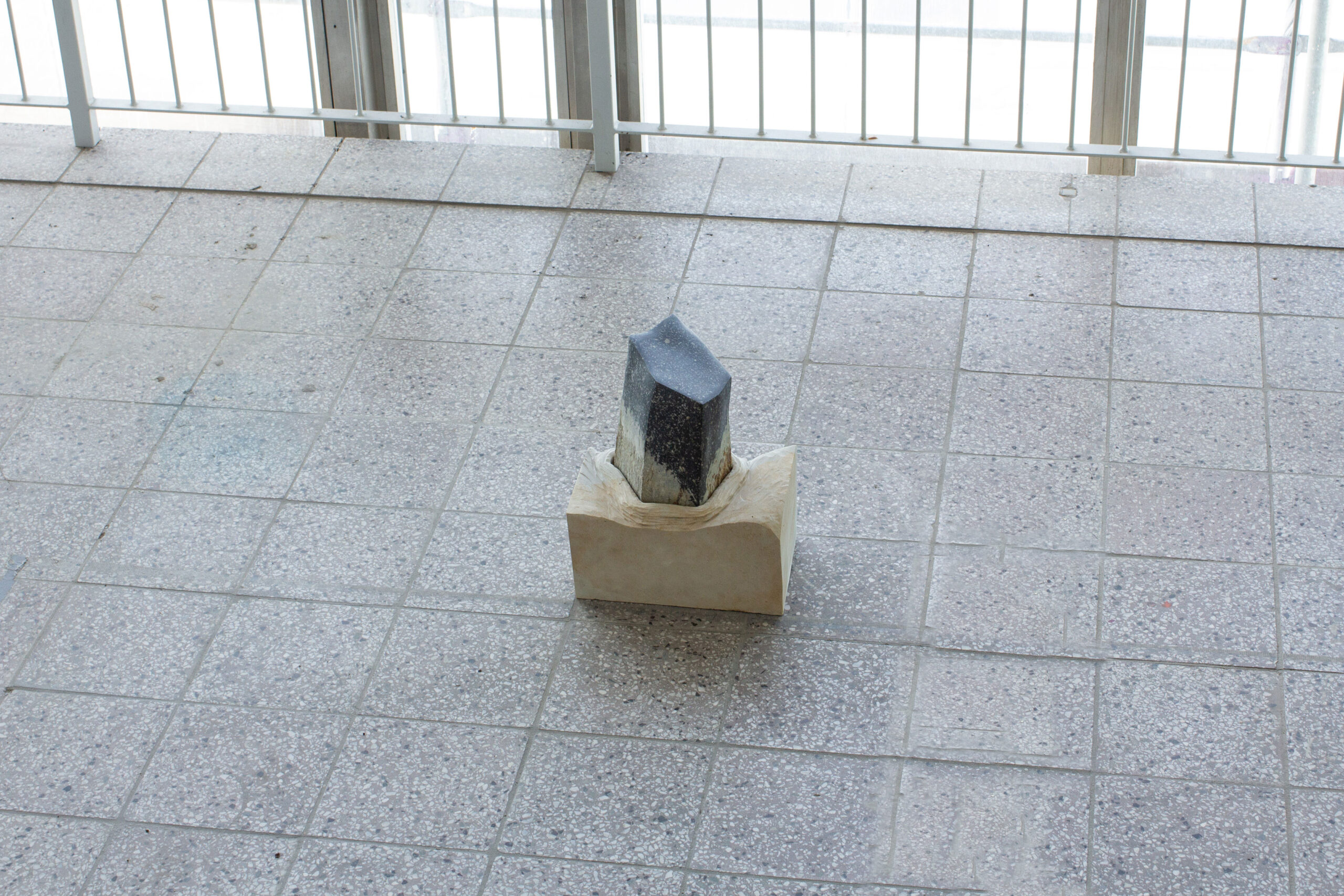
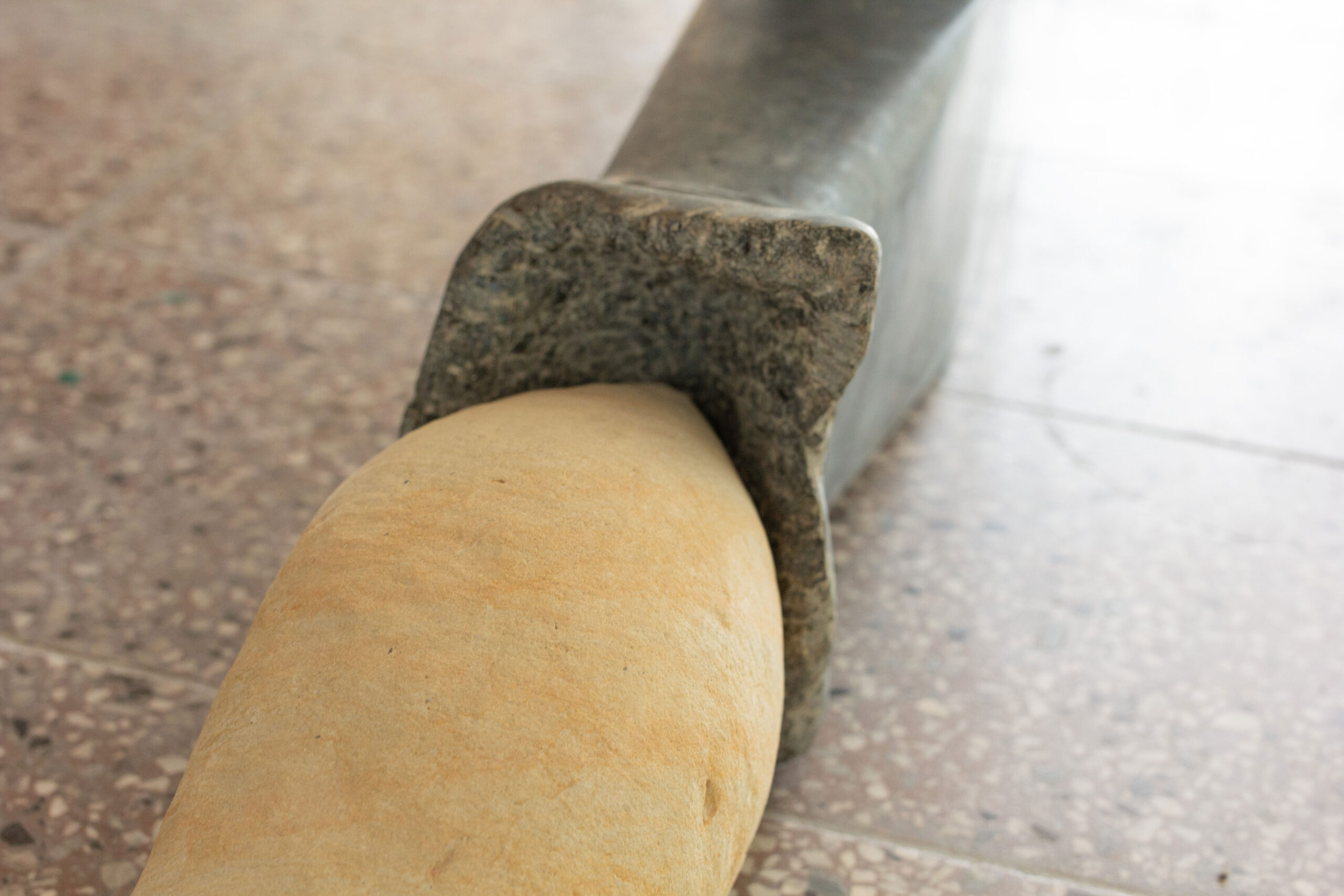
the base II, basalt, sandstone, 37,5 x 30 x 42 cm, 2024


The materials I use in the base II and III are found fragments – primarily discarded gravestones and their pedestals that have been removed from cemeteries. My artistic approach plays with the original function of these found objects and places them in a new context. They speak of decay and oblivion, of once-significant monuments that now serve no purpose. They are like remnants from the era of humanity, slowly transforming into something new or remaining passive until they are overlaid and absorbed by new entities.

the base I

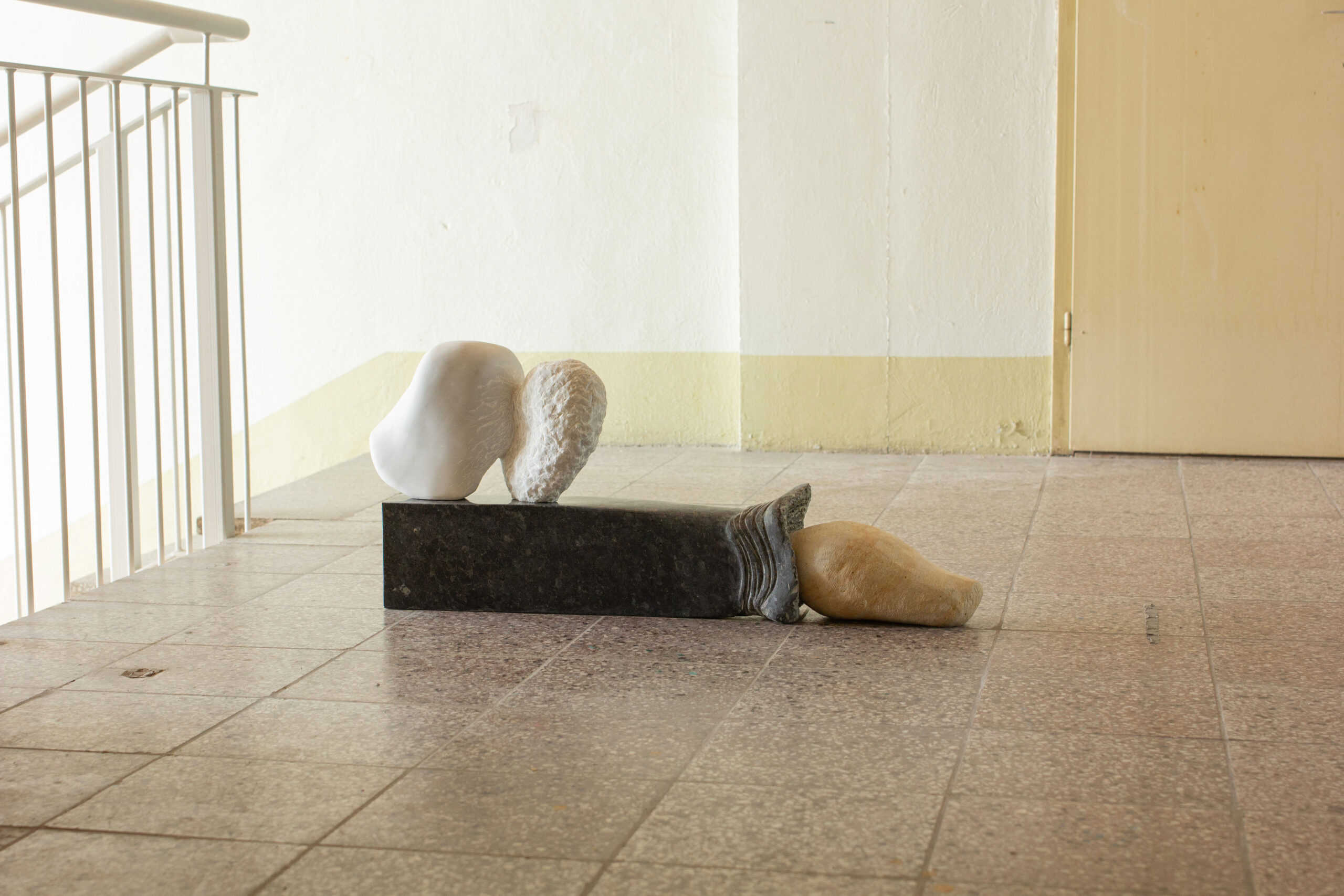
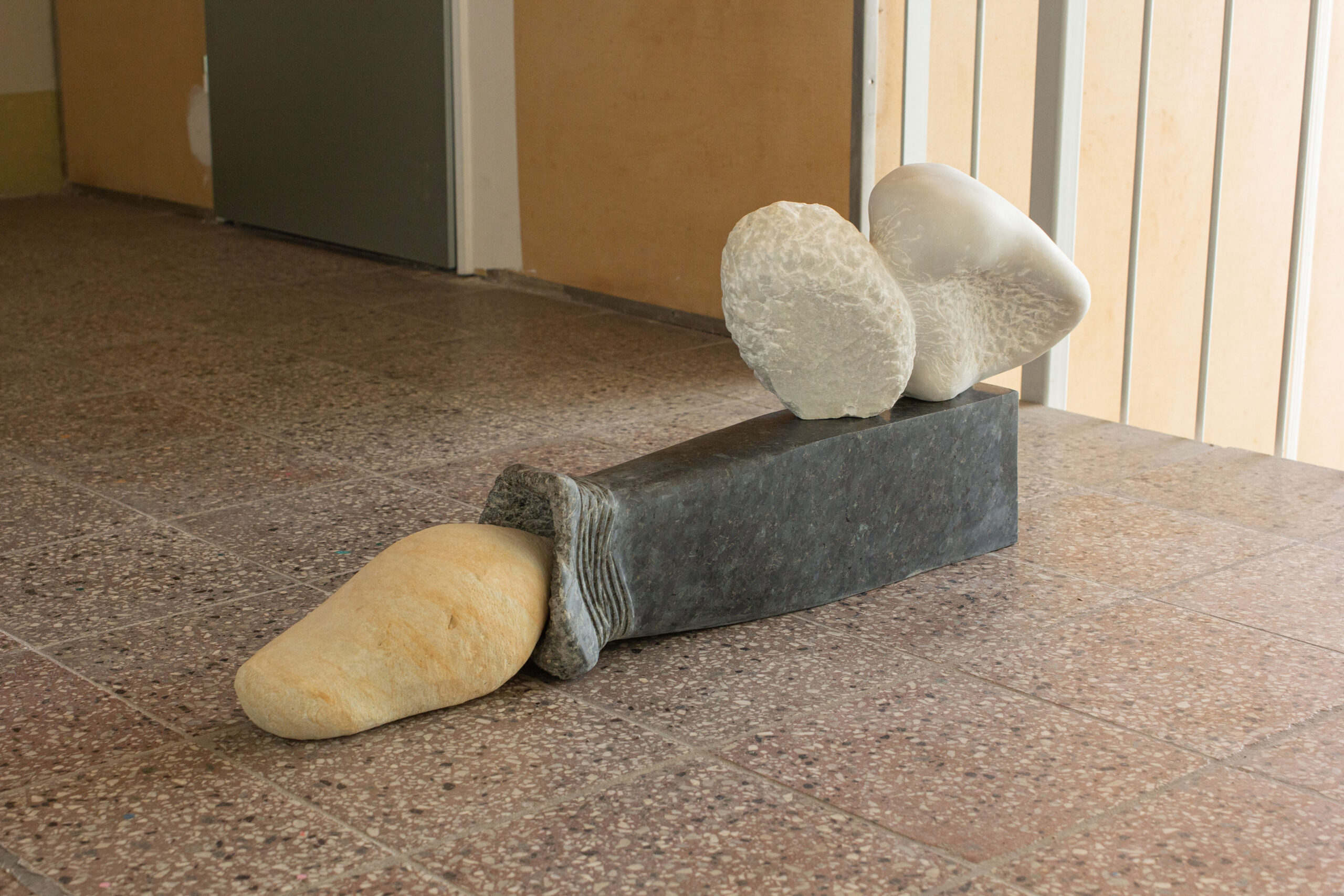
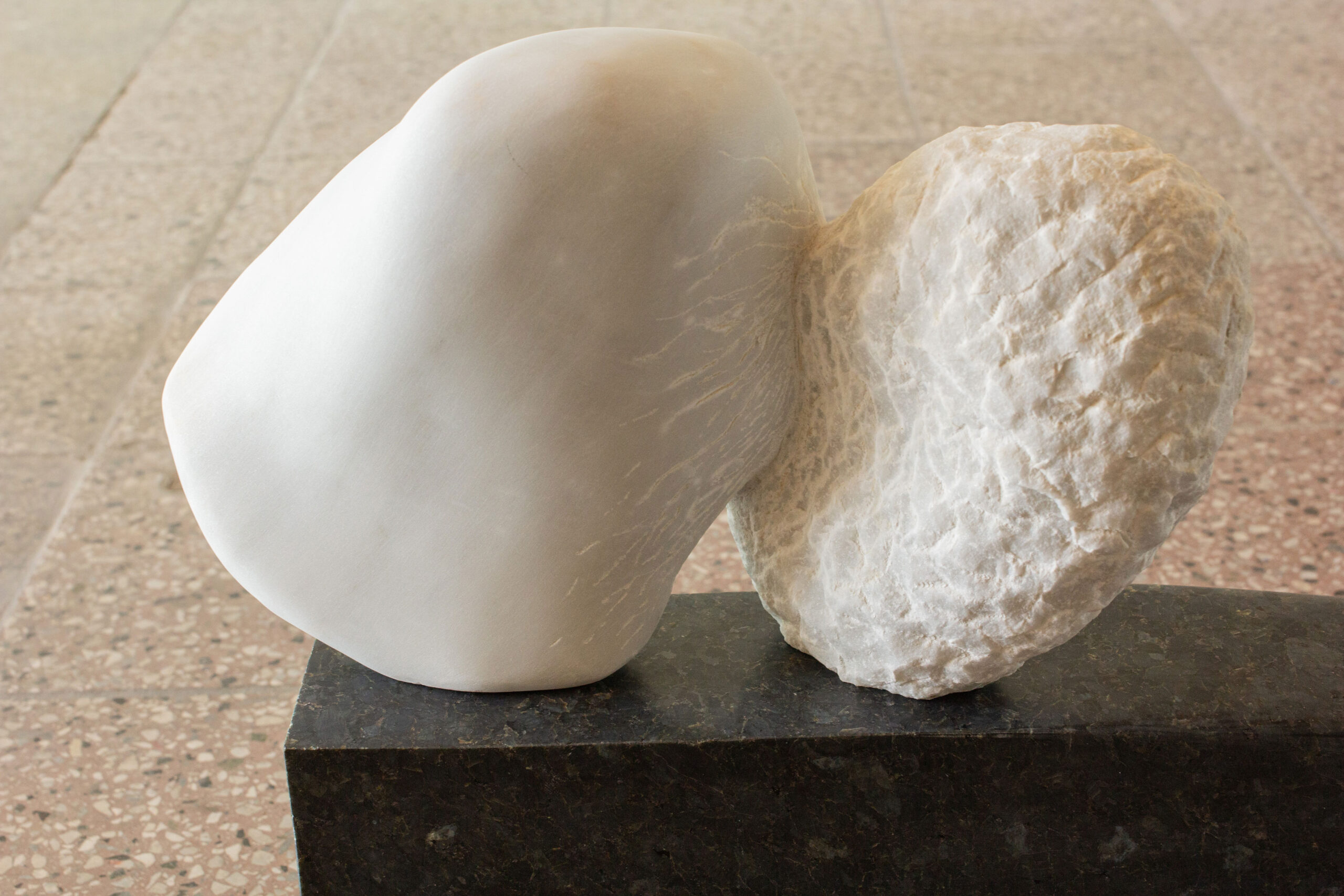
the base I, marble, granite, sandstone, 103,5 x 22 x 45,5 cm, 2024


The work the base I engages with classical forms of presentation in sculpture, deconstructs them, and transforms them into a stage for relationships and encounters. Its point of departure is a stone pedestal – traditionally a symbol of stability, support, and formal linearity. Yet in this configuration, it sheds its passive role: it opens up, becomes permeable, stimulated by another object that prompts it to unfold. The pedestal, once a foundation, becomes an active participant in a moment of contact.

The marble placed above it seems aware of its own staging: it claims the space assigned to it, presenting itself almost performatively. This act of self-presentation evokes themes of corporeality and visibility – but also raises questions of dominance, surface, and spatial relevance. For the attention intended for it is disrupted by the interaction with the other element of the installation.

In the base I, the interplay of form and relationship becomes tangible. The sculptural elements do not act in isolation, but enter into a sensitive interrelationship – one that reveals openness, tension, and mutual influence. The work opens a space in which materiality is not static, but touches, moves, and acts in relation. Within this dynamic, the absurd, the humorous, and the vulnerable aspects of encounters are revealed.
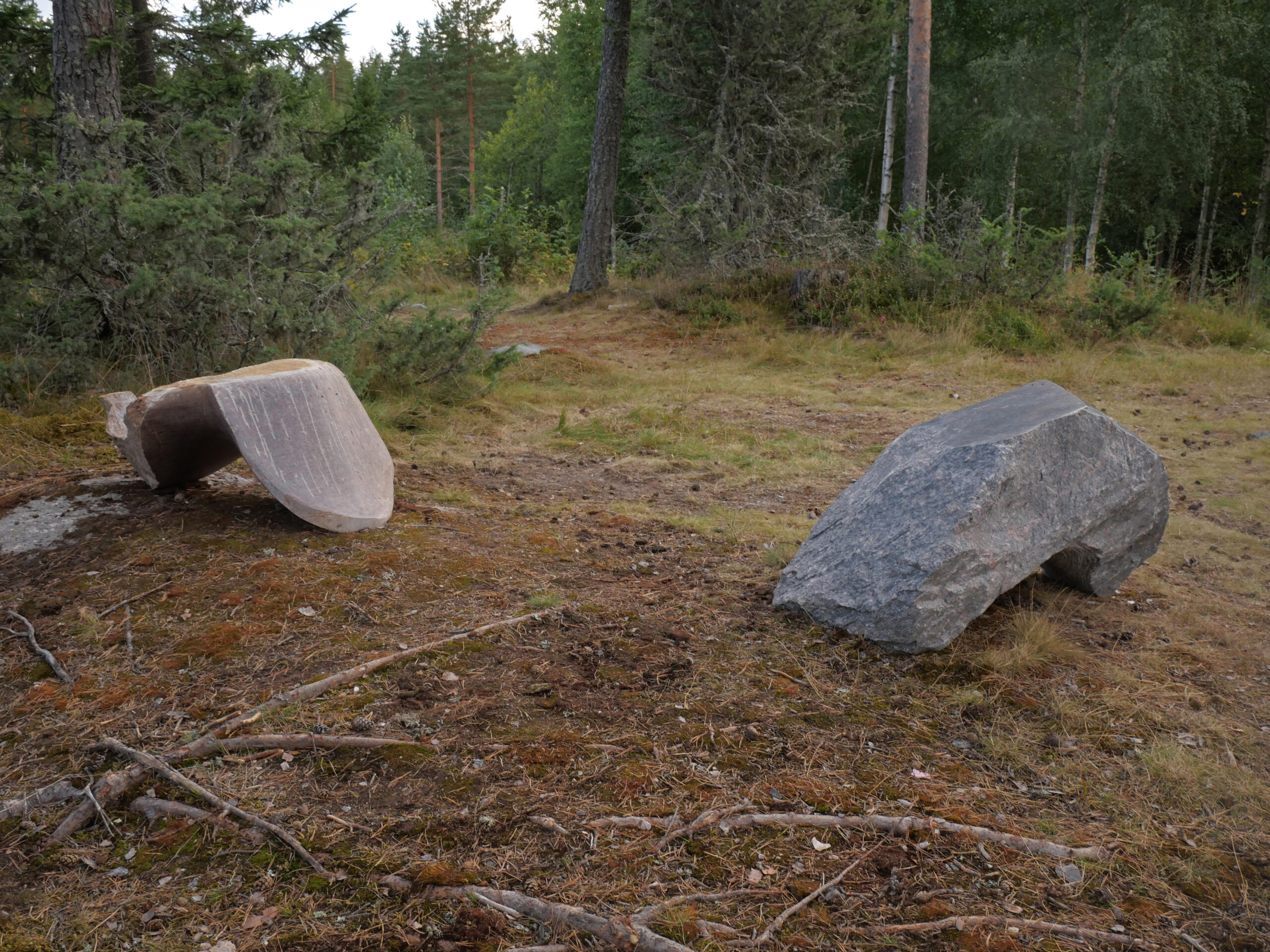
down and up

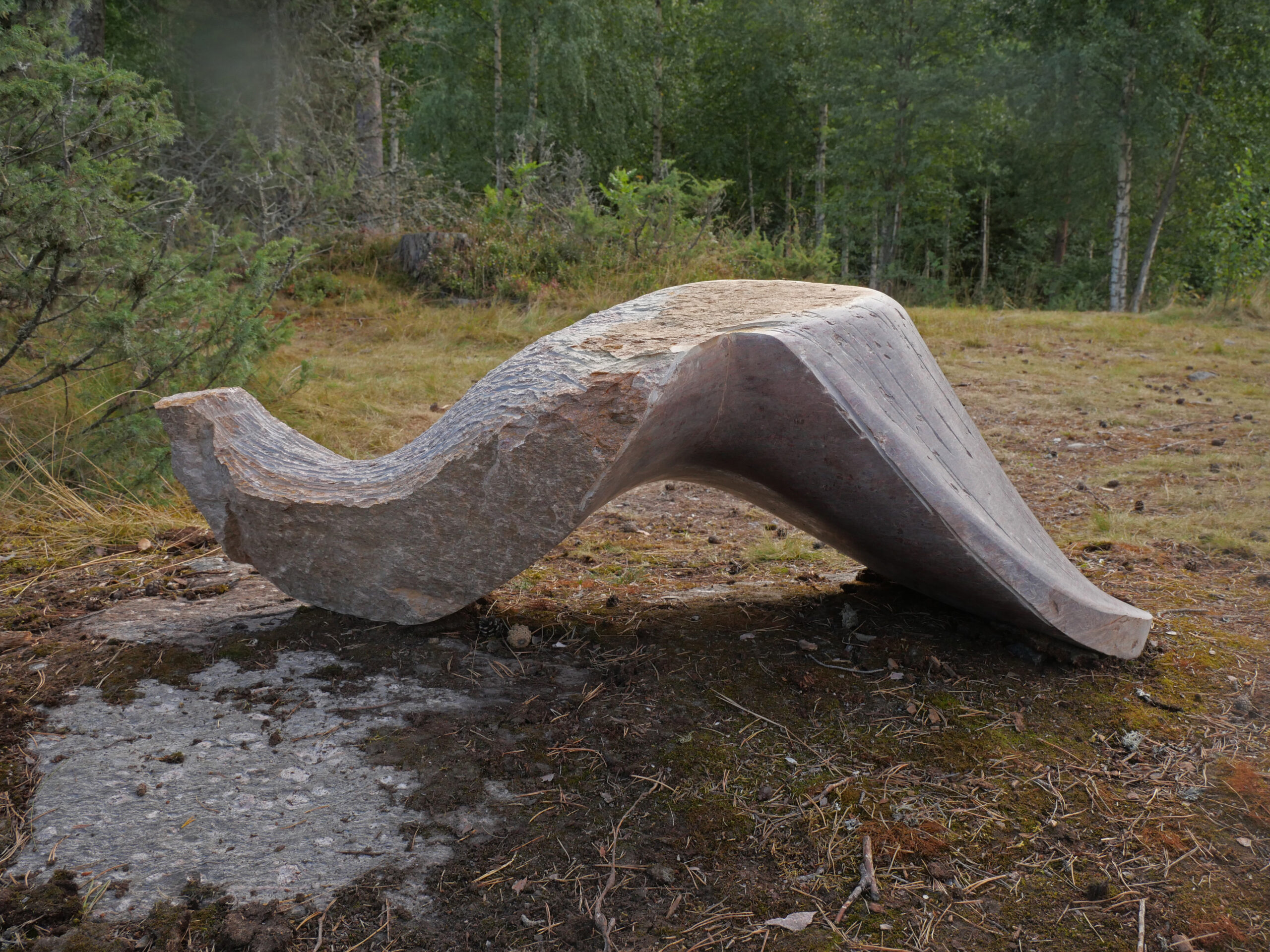
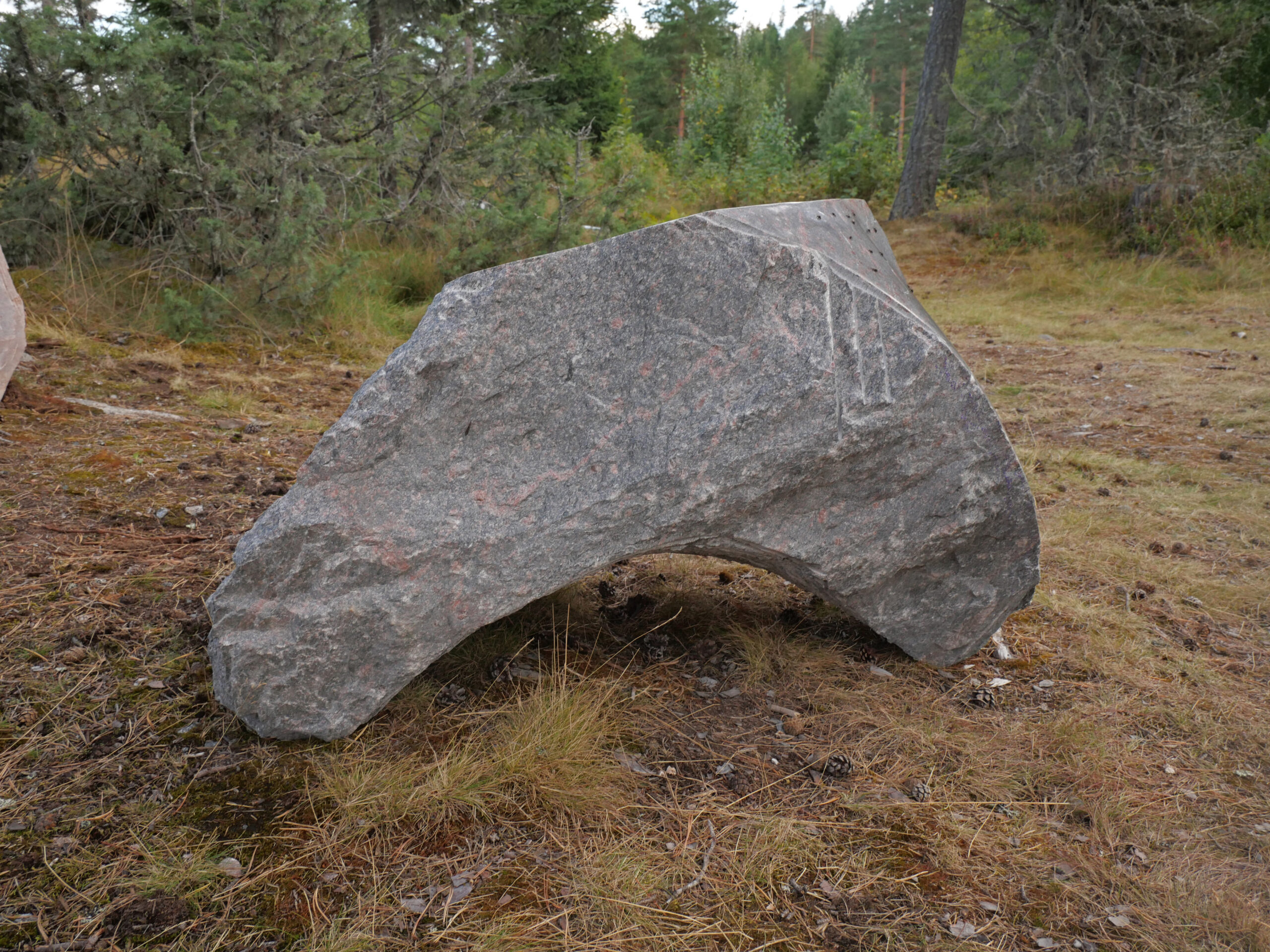
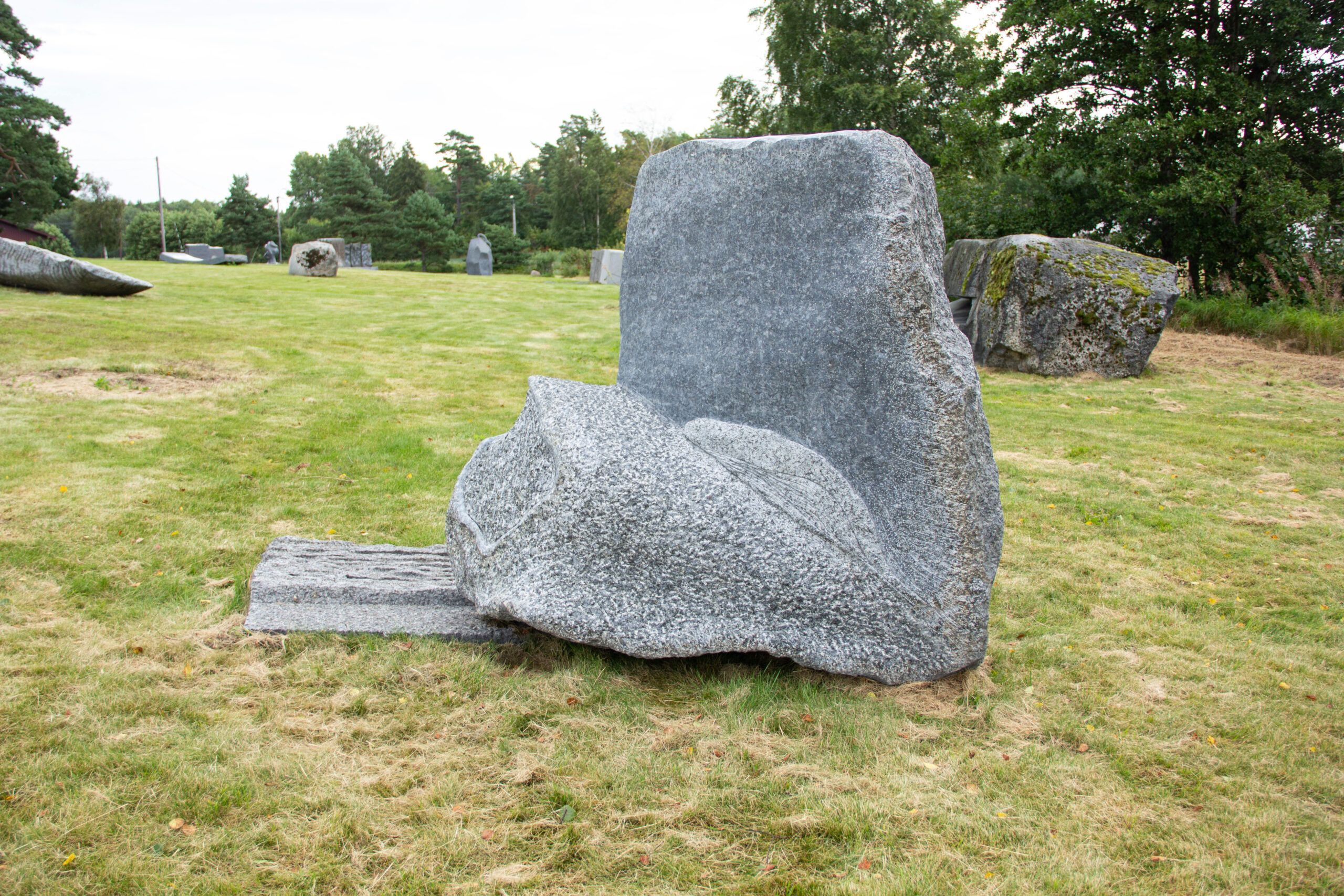
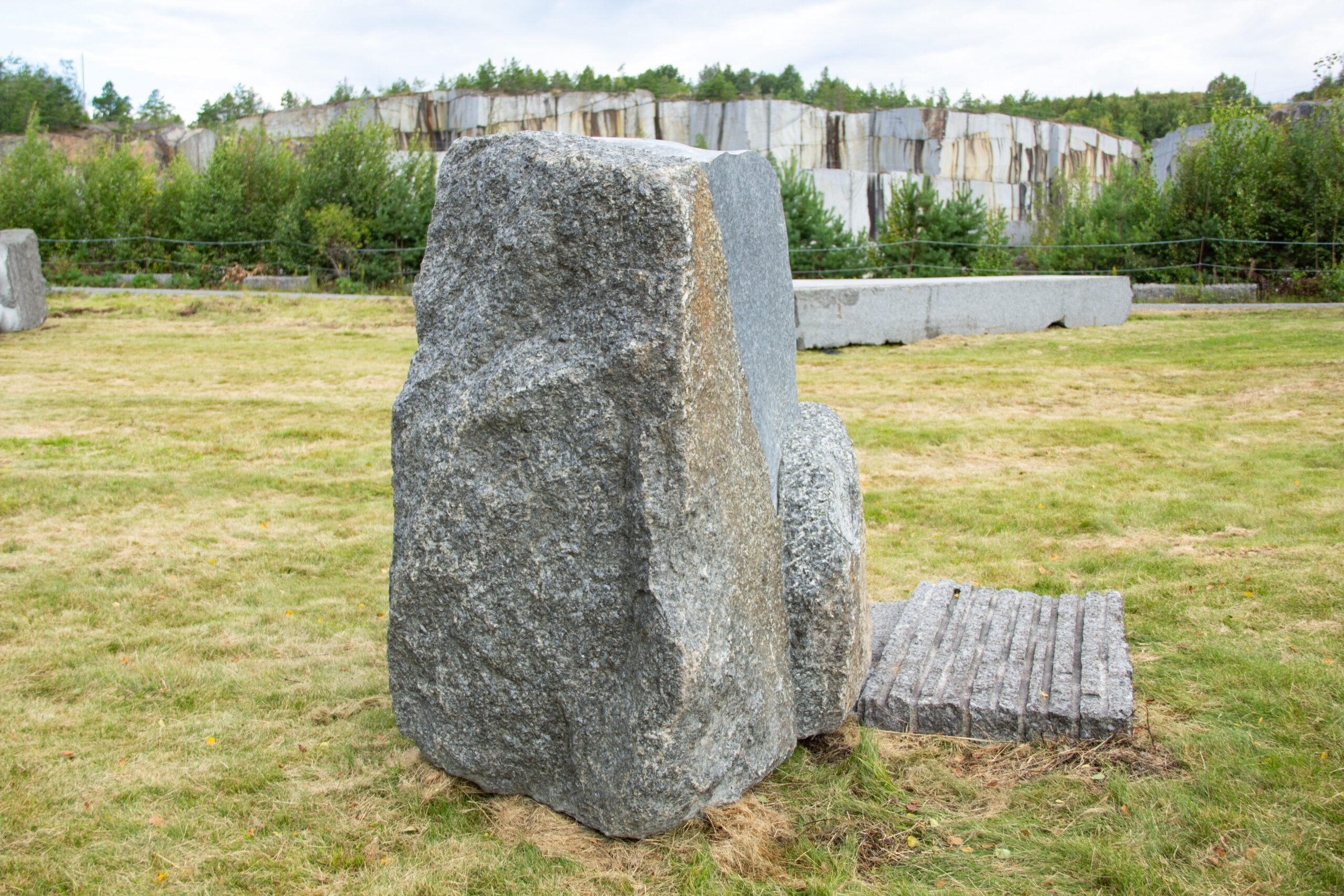
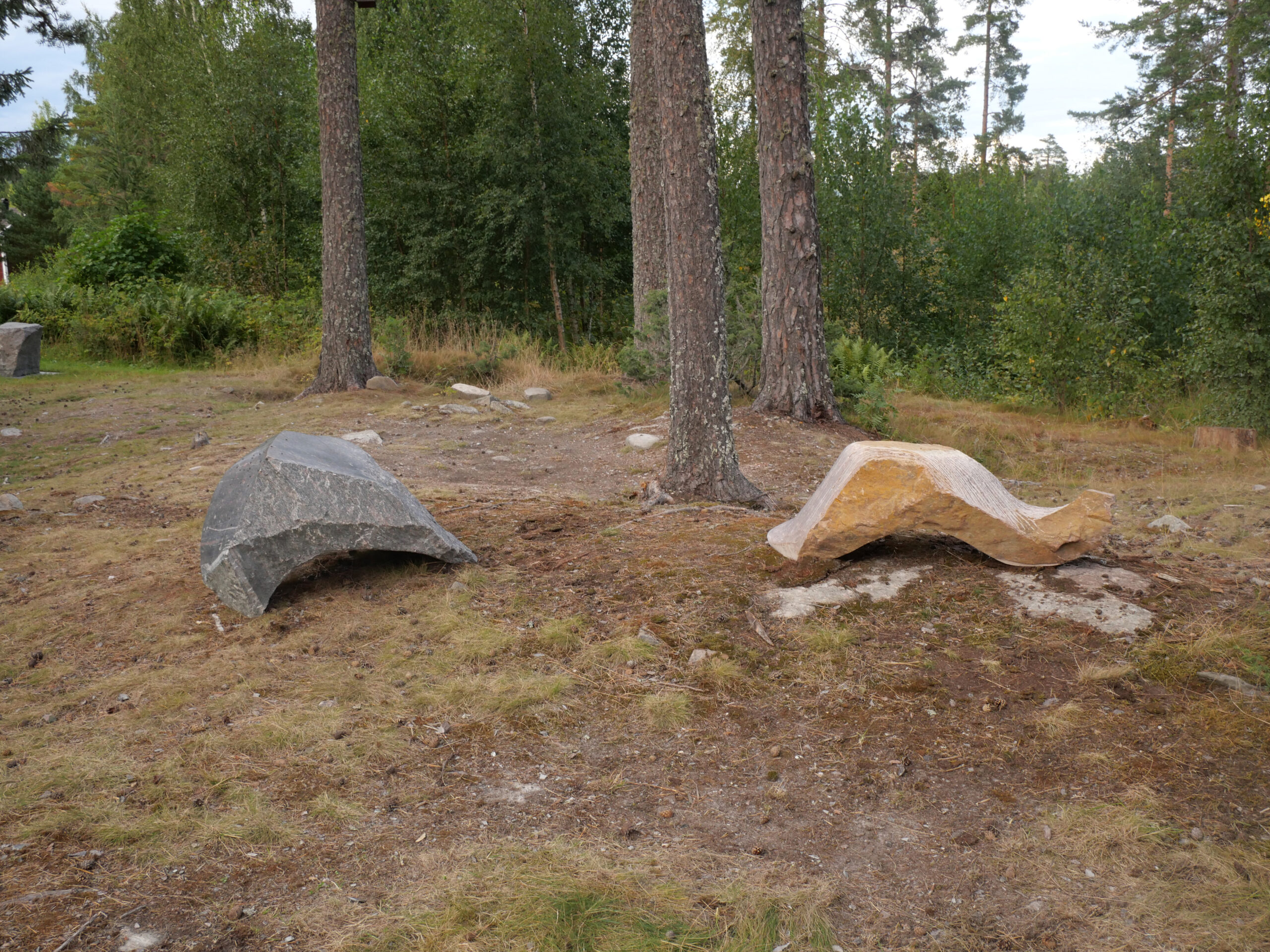
down and up, larvikite, 230 x 160 x 170 cm, 2024


In my work down and up the focus is on the process. I came to Norway without an idea, without a specific vision. I let myself be carried by the country and its culture, absorbing everything around me and the stone. I wanted to follow its character and trace its existing lines, to open it up for viewers, to turn its inside out.
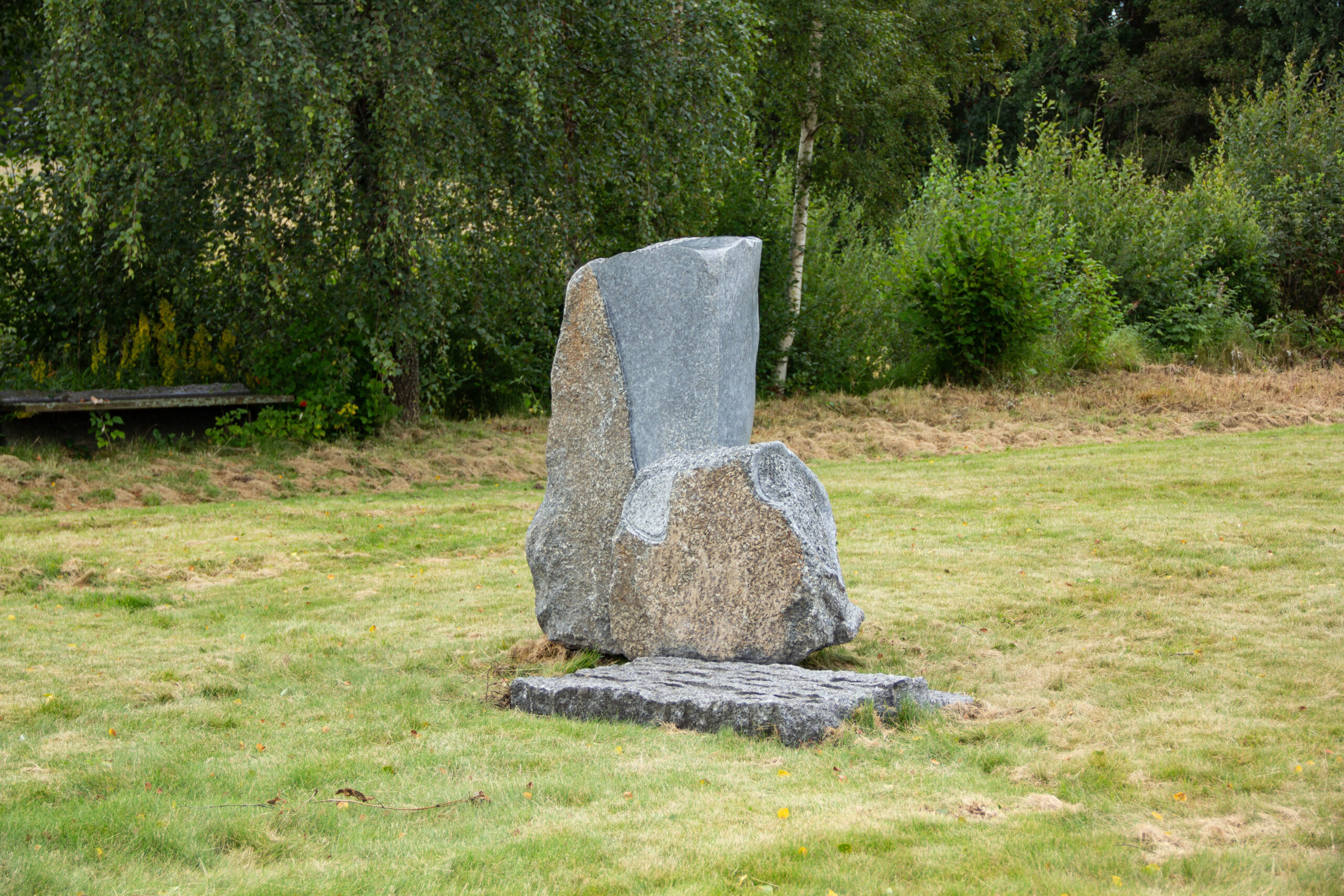
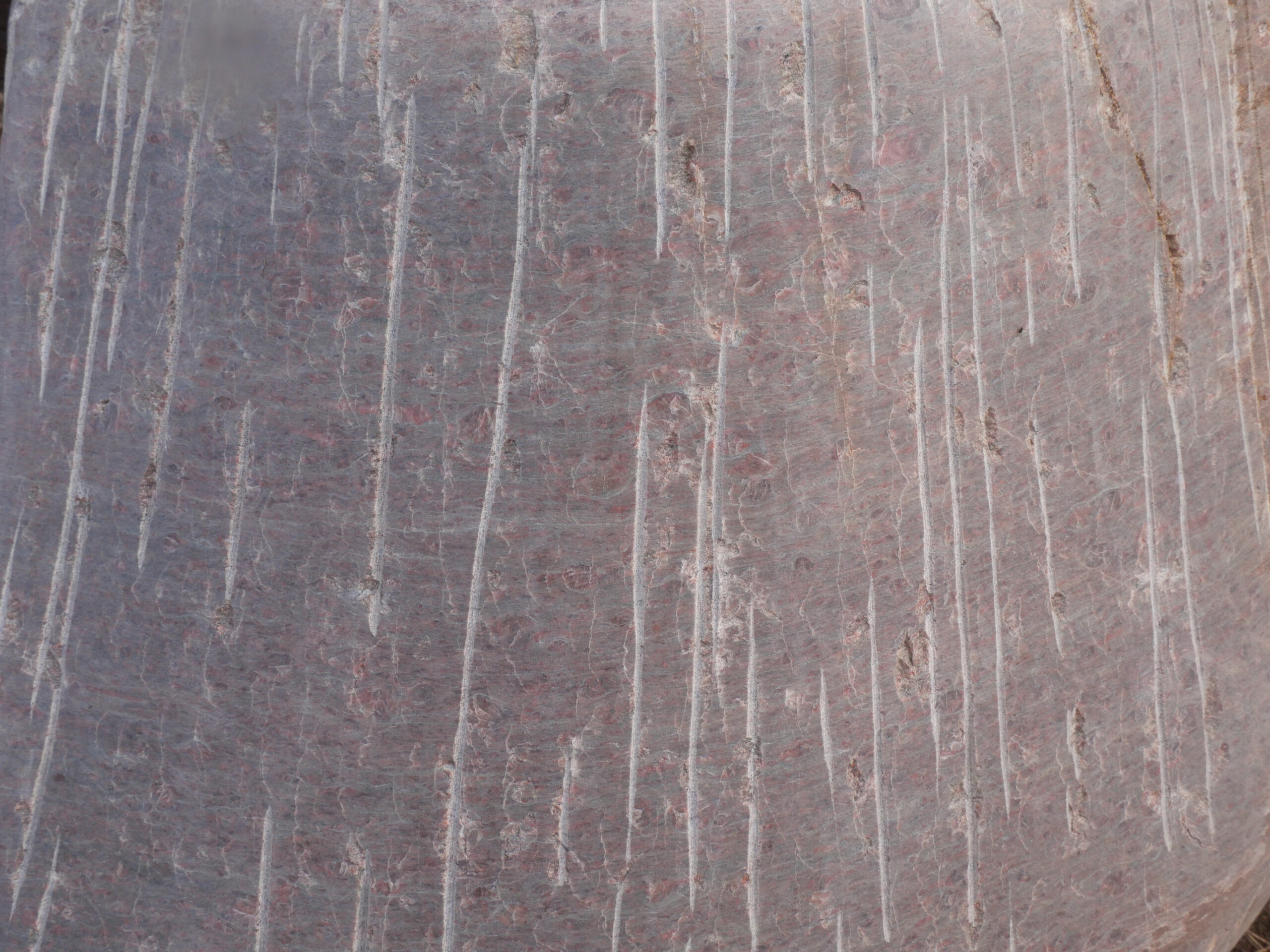
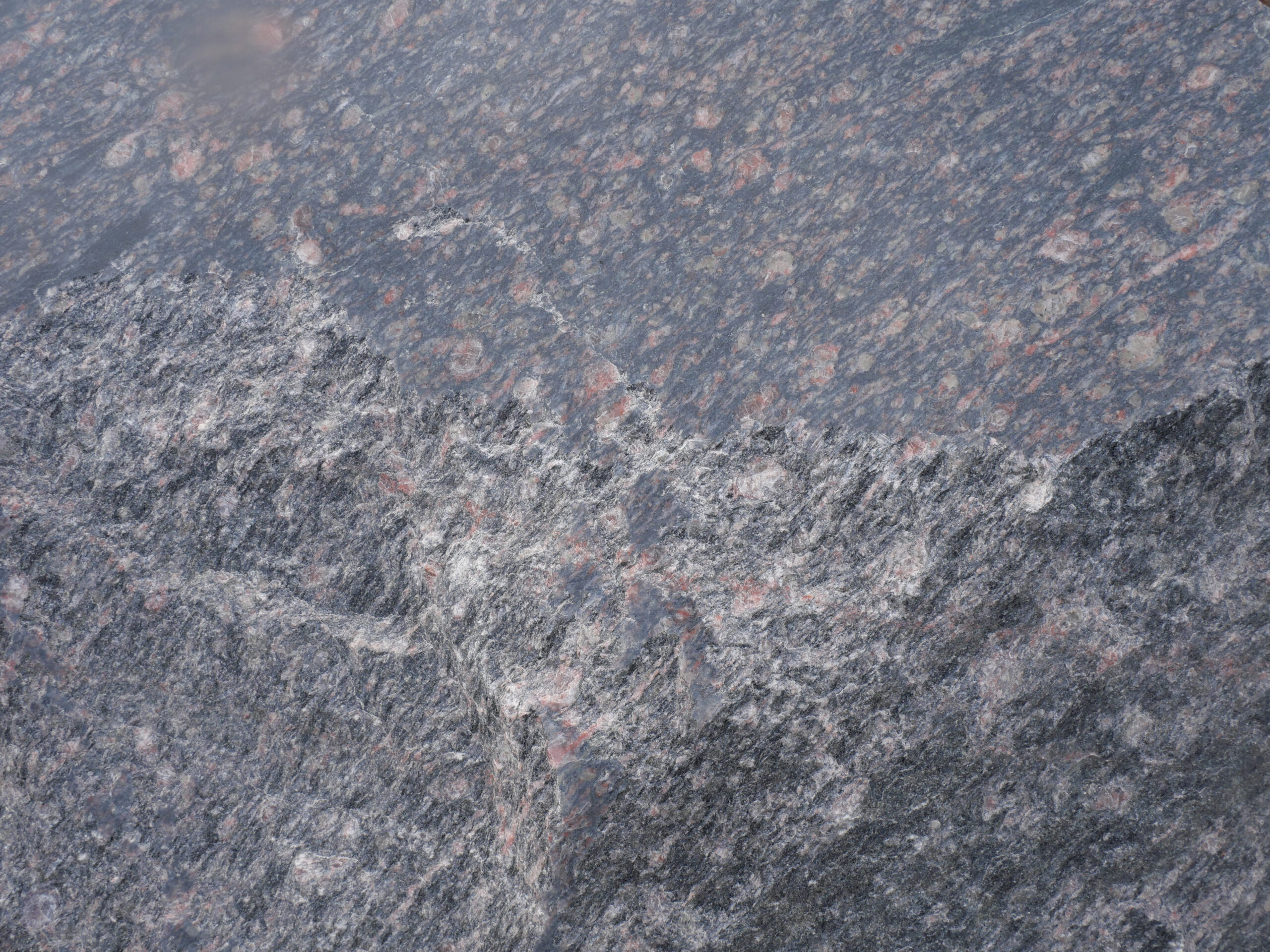
The hard physical work I performed on it – the violent cutting with the angle grinder, the monotonous blows with hammer and chisel, the fine smoothing structures – all this remains visible in the stone. I developed a shape that speaks of the physicality of the process, the vulnerability of a material, the vulnerability of a relationship, about working together, working against each other, about being together.